Showing posts with label books. Show all posts
Friday, February 14, 2014
Personal reading history
Happy Valentine's Day! I've been hunkered down at home with a nasty virus, and the wintry mix outside isn't doing much to make things feel more festive. So instead, I've been daydreaming about our summer honeymoon in England.
Josh and I have been studying guidebooks galore, making lists of places to see and trading visions of our 9-day trip. I'm such an Anglophile, and lately we've watched so much Downton Abbey, Sherlock, Marple, and Call the Midwife that Josh has turned over to the Union Jack side, too. It's been great fun to page through books and websites, or even to see the London Eye in the opening credits to Sherlock and say, "We'll be there!"
(Also, several researchers have found that people get the most enjoyment out of planning a vacation, rather than going on a vacation! So far we've definitely been enjoying the planning process.)
I discovered a funny thing while flipping through a guidebook one evening. On a map of Wessex I saw the detail "Quantock Hills" and sat up straight and gasped. Why? Because when I was in high school, I was totally obsessed with the series "Sisters of the Quantock Hills" by Ruth Elwin Harris. It was about four sisters growing up in the early 1900s, and a centerpiece of all four books revolved around the trip they made to the Quantock Hills. On some level I knew that the hills existed in real life, but it was so surprising and gratifying to see them on a map.
The same thing happened with other locations: Dartmoor and Exhampton reminded me of Agatha Christie's The Sittaford Mystery, while Epping Forest recalled Lord Peter Wimsey's investigations in Unnatural Death. I told Josh, only half-joking, that we could chuck it all and just make a literary pilgrimage. And that's not counting Bloomsbury, or Jane Austen's house, or Haworth...
It's oddly satisfying to see your personal reading history written on a map. Such a small country, but one with so many writers who've produced so many long-standing works. It makes all those characters seem more real, somehow, and those works seem more like history than imagination. Now, if I can just convince Josh to go on a hike through the Quantock Hills...
Tuesday, January 28, 2014
Winter is coming
But really, it's here.
Last weekend Josh and I hosted two separate gatherings of friends to play the Game of Thrones board game. This is a complicated, multiplayer game where folks play as the houses (House Stark, for example) from the books by George R.R. Martin. Each house aims to capture seven castles, all while dealing with betrayal, vicious fighting over single pieces of land, and lots of jokes about Valyrian steel.
Here's where I confess.
I'm in the midst of both reading and watching Game of Thrones, and it's tons of fun. Josh blazed through all the books a few summers ago (and suffered through a major, inadvertent spoiler), and watched the entire TV series about as quickly. I am traditionally pretty measured in my approach to media: I don't binge-watch TV shows, I like to space out my installments of beloved book series. Right now I'm gearing up to watch the second season and read the third book (because of course, it's best to read first, then watch). George R.R. Martin has done a fabulous job constructing a complicated world with compelling characters, and even though it's sometimes hard to keep track of everyone, the first two books have been immensely fulfilling.
So yes, playing as House Baratheon was pretty great. Even better was playing with Josh's personalized deck of cards, which he developed over winter break. We also brewed some medieval spiced wine, which, while not technically of Westeros origin, might very well have been served at Ned Stark's banquets. It was warm and toasty and spicy and did the trick on a cold winter's night.
All Stark jokes aside, though, I've been having a rough time with winter this year. Sure, I love snow days, and tramping around in freshly fallen snow is satisfying in a way I can't describe. But there's something about the bleakness of the days, the gray skies and biting wind, the fumbling with keys while you still have your mittens on, the inability to just sit on the porch and enjoy the day because the weather sucks, that gets to me. After the hustle and bustle of the holiday season, January and February are bitter. It was great fun to sit inside over a board game, but now that the workweek is once again upon us, it's hard to be interested in much of anything when the weather's like this.
In the meantime I'll make some more spiced wine and watch my narcissus grow. Spring has to be on the way, right?
Spiced Wine (Hypocras)
(from Medieval Cookery)
4 cups red wine (roughly one bottle)
5 tbsp sugar
2 tsp powder douce (recipe follows)
First, make the powder douce: mix 3 tbsp ginger, 2 tbsp sugar, 1 1/2 tbsp cinnamon, 1 tsp cloves, and 1 tsp nutmeg together in a small bowl.
Next, pour 2 tsp of the powder douce, and the sugar, into a saucepan. Mix in the red wine. Warm over medium-low heat until steaming. Serve in cozy mugs.
Friday, November 22, 2013
Colonial Cookbook: The Art of Cookery Made Plain and Easy
Meet Mrs. Hannah Glasse. By day, she is a plain English housewife, struggling to scrape by in the mid-1700s. By night, however, she works on her revolutionary new idea: a cookbook designed for the masses of untrained servants working in fine English homes.
By 1746, when Glasse began to write The Art of Cookery Made Plain and Easy, a growing middle class was settling into the cities of England. Hoping to set themselves up comfortably, they hired servants, but very few of those servants actually knew how to cook. Glasse aimed to fill that void with her cookbook, offering a collection of original recipes and those rewritten from other sources. She was clear about her motives: "I do not pretend to teach professed Cooks, my design being to instruct the ignorant and unlearned...and that in so full and plain a manner, that the most ignorant Person, who can but read, will know how to do Cookery well," she stated in her introduction.
And instruct she did. According to food historian Karen Hess, Glasse's book sold well in England and her colonies in North America following its publication in 1747. Many noted Americans owned copies (including Thomas Jefferson and George Washington), despite their growing discontent with Mother England. In the mid-18th century, many Americans still relied on English foods, as they still saw themselves as British subjects. Yet ingredients found only in North America crept into their English recipes, as Glasse's special "American Mode of Cooking" section proves.
And we see "American" ingredients and recipes in this book because I'm using the 1805 edition. By this point, foods in America began to take on a more distinctly "American" flavor, just as the newly-minted nation began to form its unique identity. This edition comes at a major turning point in American history, and the recipes and ingredients reflect that, harking back to the colonists' European origins while looking ahead to New World foods.
I'll try to highlight that cross-section with the recipes I choose from Glasse's book, but of course you can expect some recipes just for fun, too. How could I have resisted those stewed pears?
Works cited: "Hannah Glasse: The original domestic goddess" (Independent). British Library. Karen Hess introduction.
![]() |
| source: Wikipedia |
By 1746, when Glasse began to write The Art of Cookery Made Plain and Easy, a growing middle class was settling into the cities of England. Hoping to set themselves up comfortably, they hired servants, but very few of those servants actually knew how to cook. Glasse aimed to fill that void with her cookbook, offering a collection of original recipes and those rewritten from other sources. She was clear about her motives: "I do not pretend to teach professed Cooks, my design being to instruct the ignorant and unlearned...and that in so full and plain a manner, that the most ignorant Person, who can but read, will know how to do Cookery well," she stated in her introduction.
And instruct she did. According to food historian Karen Hess, Glasse's book sold well in England and her colonies in North America following its publication in 1747. Many noted Americans owned copies (including Thomas Jefferson and George Washington), despite their growing discontent with Mother England. In the mid-18th century, many Americans still relied on English foods, as they still saw themselves as British subjects. Yet ingredients found only in North America crept into their English recipes, as Glasse's special "American Mode of Cooking" section proves.
And we see "American" ingredients and recipes in this book because I'm using the 1805 edition. By this point, foods in America began to take on a more distinctly "American" flavor, just as the newly-minted nation began to form its unique identity. This edition comes at a major turning point in American history, and the recipes and ingredients reflect that, harking back to the colonists' European origins while looking ahead to New World foods.
I'll try to highlight that cross-section with the recipes I choose from Glasse's book, but of course you can expect some recipes just for fun, too. How could I have resisted those stewed pears?
Works cited: "Hannah Glasse: The original domestic goddess" (Independent). British Library. Karen Hess introduction.
Labels:
18th century,
19th century,
books,
britain,
hannah glasse,
history lesson
Friday, May 17, 2013
Why I love historical recipes
I've been chronicling my adventures in historical cooking for almost two years now (!), but it wasn't until recently that I began to wonder why. I love history, isn't that enough? Well, yeah, but what's the bigger picture? Why does it matter to cook from old recipes?
Here are a few of the answers I've come up with. Yes, they're fun and strange and sometimes all too familiar, but they also have a lot to do with respecting the past and thinking mindfully about everyday life.
- Historical recipes are often made with whole foods. In the book In Defense of Food, Michael Pollan famously wrote, "Don't eat anything your great-grandmother wouldn't recognize as food." By this he meant to avoid overly processed foods, items with unpronounceable ingredients, or foods with catchy marketing names, like Go-Gurt. In a recent interview he explains further: we should try to eat foods that were around before the post-WWII food manufacturing boom. That way you have a better chance of consuming more natural foods--that is, foods closer to their natural state, something Josh and I have been trying to do. Recipes from the pre-WWII era are more likely to include fresh, whole veggies, fruits, and meats.
- They teach me to be a more flexible cook. Before the late nineteenth century, most cookbooks assumed women knew their way around a kitchen. Mothers taught their daughters how to cook, and recipes just fleshed out their repertoires. Cookbook writers rarely used exact measurements, instead telling women to take a "bit" of cooked fish or a "handful" of flour. Baking was a different story--writers were more precise, probably because of the proportions necessary to make sure bread rose and pie crust didn't collapse--but women were meant to use their intuition and years of experience when cooking. I'm a notorious recipe-reader, and it's scary to eyeball a spoonful of herbs instead of measuring them exactly. What if the food turns out too salty or too bland? But I'm slowly letting go of exactness, encouraged by the reassuring lack of measurements in old recipes. And for the most part, the food turns out okay.
- They teach me to enjoy meals more. Nineteenth-century meals were elaborate, and most families of even modest means tried to enjoy dinner together. Sitting down together at the dinner table showed respect for the time it took to make the meal. Today it's all too easy for Josh and me to gobble down dinner in front of the latest Supernatural episode, but we try to sit down at the table when I cook from an old recipe. We have a chance to catch up on our days and talk as though we have all the time in the world.
- They help me appreciate how far we've come. Laura Ingalls Wilder had to subsist on salt pork because there were no refrigerators and few slaughtering animals on the prairie. Pieces of fatback were salted beyond recognition so they would keep for long periods of time. Yes, salt pork is delicious, but it gets old after a while. I really appreciate purchasing a small piece of fresh meat from the grocery store or the farmers' market and keeping it in the fridge until I'm ready to cook. Similarly, I love my gas stove and oven. So much easier than slaving over a hot fire every day (including the dead of summer!).
- They give me respect for the women who came before me. Notice how I refer to most cooks as "women." For centuries and centuries, women have been the ones to cook meals for their families, using the very recipes I write about here. But I have it easier, because I have my handy gas stove and oven, refrigerator and freezer, and inexpensive "luxury" items. I cook for two people. Half the time Josh cooks instead, and we divide dish-washing duties. The women before me had no such luxuries, and they cooked three meals a day, seven days a week, often with only their daughters to help. They fed large families, on top of washing laundry, cleaning house, and raising their children. And their husbands probably didn't offer to cook. Women of the past were truly indomitable.
Labels:
books,
domesticity,
health,
history lesson,
lessons learned,
michael pollan
Sunday, April 7, 2013
The Ancient Table: Roast boar
![]() |
| Obelix with dinner |
For the past couple of weeks, the cogs of my "immersion" brain have been turning, slowly putting together disparate strands of information. We've just started studying ancient Rome. There's a stand at the farmers' market that sells boar. I used to think boar looked delicious in Asterix comics. (And anything that lets me refer to Asterix while teaching is good in my book.)
Finally, it comes together: let's roast some boar the ancient Roman way!
When I told Josh my plan, he said, in characteristic fashion, "Oh, boy." But then he realized how grand it sounded: roast boar! The manliest of dishes!
It took a few more weeks to get organized. First, there was the recipe. While I took Latin in high school, my translation skills have atrophied to the point where I need to refer to an English-language recipe (sorry, Ms. V.). I found the perfect book at the library, Around the Roman Table by Patrick Faas. According to Faas, the Romans originally served boar divided in three parts, but they transitioned to serving whole wild boar towards the end of the Republic (as they moved to an empire). However, I have neither an oven large enough for a boar nor the capacity to consume a whole boar, so adaptations had to be made. I relied primarily on Faas' recipe, which he converted from a recipe by M. Gavinus Apicius, author of the only ancient Roman cookbook still in existence. But I also occasionally referred to modern recipes for loin roast of wild boar, since the temperatures and timing were more appropriate to my experiment.
Next, the boar. My friendly neighborhood farmer sold boar in smaller pieces, so I chose a 3-lb boneless loin roast. A few days before I planned to cook, I let it defrost in the refrigerator. Exactly two days before I planned to cook, I rubbed the meat with a fragrant spice rub of crushed, toasted cumin, pepper, and sea salt. Then I let the meat marinate for two days, turning it occasionally.
Finally, the big night arrived. Roasting went pretty much as I expected, though the "low and slow" method recommended by so many websites left me tapping my toes, waiting for the meat to be finished. (This probably happened because I didn't let the meat return to room temperature before cooking.) You really need a meat thermometer for this kind of experiment--mine was invaluable. As the meat cooked, I prepared a rich wine sauce to serve alongside the boar; apparently the Romans liked their boar with regular and dessert wine!
We set out plates with meat, sauce, and rather more modern braised leeks and carrots. Then we tasted it.
"I love this!" Josh exclaimed. "I usually hate pork, but...I love this!"
Yes, friends, if you're not a fan of pork, then roast boar is the way to go. It's lean and moist, and it picks up the fragrance of the spice rub so that the whole roast tasted faintly of toasted cumin. And the wine sauce? Divine.
Goscinny and Uderzo weren't lying: that roast wild boar in Asterix really is delicious.
Roast Boar
for the boar:
3 lbs boneless loin roast of boar
1 tbsp cumin seeds
1 tsp ground black pepper
2 tsp sea salt
for the sauce:
250 ml red wine (a little over 1 cup)
1 tbsp honey
100 ml dessert wine (about 1/3 cup)
salt
To make the boar:
Two days before cooking, rinse the loin roast and pat dry. In a dry skillet, toast the cumin seeds over low heat until fragrant, about 3-4 minutes. Move to a mortar and pestle and grind the seeds with the pepper and salt. When you have a fine mixture, sprinkle all over the boar. Refrigerate the boar for 2 days, turning occasionally.
When you're ready to cook, preheat the oven to 500 F. Let the boar return to room temperature. Set the boar on a rack in a roasting pan and insert a meat thermometer if using. Place the boar in the preheated oven for 10 minutes to brown, then reduce the heat to 250 F and cook for 1 to 1 1/2 hours, checking the thermometer. Meat is done when the thermometer (or an instant-read one) reads 150 degrees. Remove the meat from the oven and place on a platter, then tent it loosely with aluminum foil. Let sit for 10 minutes to finish cooking and preserve the juices.
To make the sauce:
Reduce the red wine to about half a cup over medium-low heat. Add the honey and dessert wine, mixing well, and add salt to taste.
Carve the boar into thin slices and serve with the wine sauce.
Works cited: Welcome to Brussels (image). Around the Roman Table.
Labels:
adventure,
around the roman table,
books,
childhood,
farmers market,
meat,
school,
teaching
Tuesday, March 19, 2013
The wearing of the green
Almost all the seeds I planted a few weeks ago have sprouted, and my seed tray is now a veritable wonderland of tiny green sprouts and tendrils.
While I love all the phases of the growing season (except perhaps pest control--haven't figured out a green way of combating aphids yet), this is definitely my favorite. I kneel down in front of the seed tray at least once a day, murmuring sweet nothings into the seedlings' unfurling ears. Maybe this makes me crazy...but that's fine.
Looking at the moss-like cover of the tiny lobelia sprouts puts me in mind of lush gardens and winding paths leading to secret hideaways. It's my someday dream to build a Secret Garden, as magical as the one at the end of Frances Hodgson Burnett's novel, and meanwhile I have to be content with filing away inspiration and images for later. The website Gardenista has been particularly fun to pore over--it's full of beautiful gardens from around the world, as well as advice on how to create your own.
Tell me, do you save ideas for someday gardens or someday houses? And is Pinterest good for this sort of thing? I'm tempted, but so many kinds of social media make me wary.
Labels:
activities,
books,
childhood,
dreams,
gardening,
kitchen garden,
spring
Thursday, February 14, 2013
Dining at Downton: Irish stew
I am known to get emotionally involved with fictional characters. When they fall in love, I swoon around the house. When they suffer heartbreak, I moan along with them. When they struggle to figure out what they really think about an important issue, my mind gets muddled and filled with conflicted emotions. When they die, I am crushed.
Devastated.
Yes, I am talking about Downton Abbey. No major spoilers here, but after episode 4, I lay on the couch for about half an hour babbling about how my heart had been ripped out and stomped on. How unfair this latest twist was! How could the writers take away one of my favorite characters! Death in the WWI trenches, I could understand. The Spanish flu, I could see coming. But this? My friends, it's been over two weeks and I'm still recovering.
As viewers, we're entitled to some serious comfort food to help us deal with this latest tragedy. And it's also time to give Branson his due.
Branson--or "Tom," as the more enlightened family members have to remind others to call him--burst into Downton as the revolutionary Irish chauffeur. Now that he's married Lady Sybil with the dubious blessing of Lord Grantham, he's slowly becoming a full-fledged member of the Crawley family. And this most recent twist of fate has him growing up fast. He's finding the right time to be a rebel and the right time to smooth things over with the family, and it's hugely gratifying. As one of my colleagues said, when hinting at things to come in Downton Abbey, Branson really stands up in this season. In just a few episodes, he's become one of my favorite characters.
So, in honor of Branson, and to soothe our aching hearts, I've put together a comforting Irish stew that our former chauffeur would be glad to find at the dinner table. It's an incredibly simple, easy recipe, one that calls for a few hours of simmering on the stove. With just six ingredients, I wasn't expecting much, but the slow cooking lets all the flavors melt together. The result is a tender, rich lamb stew that falls apart at the touch of a spoon.
Also, in case you're like me and need newspaper articles to remind you that none of this is, in fact, real, here's a fun interview with the actress who plays Mrs. Patmore. She talks about who actually does the cooking on set, and how much of the kitchen is functional, and who corrects the kitchen hierarchy when it goes awry. Who knew Mrs. Patmore was the Gordon Ramsey of her day?
Irish Stew
(adapted from Mrs. Beeton's Book of Household Management)
1 1/2 lbs lamb shoulder on the bone (the original calls for mutton, but lamb will do just fine)
3 cups water, with more at the ready
2 lbs russet potatoes, peeled
2 yellow onions
salt and pepper to taste
Place the lamb shoulder in a medium Dutch oven, sprinkle with salt, and pour in the water. If needed, add more water to just cover the lamb. Bring to a boil over medium-high heat. Reduce to low heat, and let simmer, covered, for 1 hour. Meanwhile, slice the potatoes and onions thinly.
Remove the lamb from the Dutch oven and cut the meat off the bone into small, 1-inch chunks. Skim the fat off the broth in the pot. Place a layer of potatoes in the bottom of the pan, and cover with a layer of onions. Scatter the meat on top and sprinkle with salt and pepper. Cover with another layer of potatoes and onions and sprinkle with salt and pepper. Bring the stew to a boil over medium-high heat, then reduce to low heat, cover, and let simmer for 1 hour. Stir occasionally to prevent bottom layer from burning.
Serve with fresh bread and cheese, plus plenty of beer to soothe your aching heart.
Friday, February 8, 2013
Scarlet fever and other Little House stories
We're battening down the hatches here in Rhode Island: there's a blizzard on the way! Josh and I both have a snow day (it never gets old), and we're planning on waiting out the storm with movies, books, and cinnamon rolls fresh from the oven.
Winter storms always make me think of Laura Ingalls Wilder's The Long Winter, where the Ingalls family (and Almanzo Wilder) have to weather a brutal winter in the Dakota territory. We're not slated to get 11 feet of snow as the prairie did that winter (yes, really!), but when the snow drifts pile up, I can't help but think of Pa tying a rope to the barn so he can feel his way back to the cabin in the driving snow. What is it about those books that sticks with you long into adulthood?
There's been some buzz in the news recently about a pediatrician who uncovered the medical truth about Laura's sister Mary losing her sight after a bout of scarlet fever. The cause of Mary's blindness is mentioned only briefly at the beginning of By the Shores of Silver Lake, but it's devastating. How can an illness, one that kids still get today, make you go blind? I remember struggling with that concept as a child. The pediatrician did, too, but during her medical rotations she learned that it was impossible for scarlet fever to cause blindness. So she set off to uncover the truth.
You can read or listen to her discoveries on NPR, and it's a fascinating story. What might otherwise be a minor family tragedy stayed with countless young readers for generations, and encouraged one of them to dig into the past.
I'll be thinking about this story today, and lots of other more wintry stories from Little House. What Little House tales have stayed with you?
Labels:
books,
childhood,
history lesson,
little house on the prairie,
winter
Monday, January 28, 2013
Planning the garden
I don't want to get all cheesy on you guys and talk about new beginnings and whatnot, but with January being so gloomy, it's hard not to dream about a fresh start. And since I'm in the middle of a crash-course fresh start at school, I've been thinking about beginnings in other areas of life, too. Lately of the green variety: the garden.
Last summer I tried out container gardening for the first time, ambitiously calling it my "kitchen garden." There were tomatoes, spinach, snap peas and lettuce. The squirrels probably enjoyed more of its bounty than I did. And yet there was something so satisfying about growing a tiny garden from start to finish. I watched my little seedlings obsessively, bending down to check on them every morning, and when they moved to bigger containers I stuck my finger in the soil every few days to make sure they had enough water. My dad and I traded tips on growing the best tomatoes. When autumn arrived and it came time to clean out the pots for next season, my heart ached a little bit.
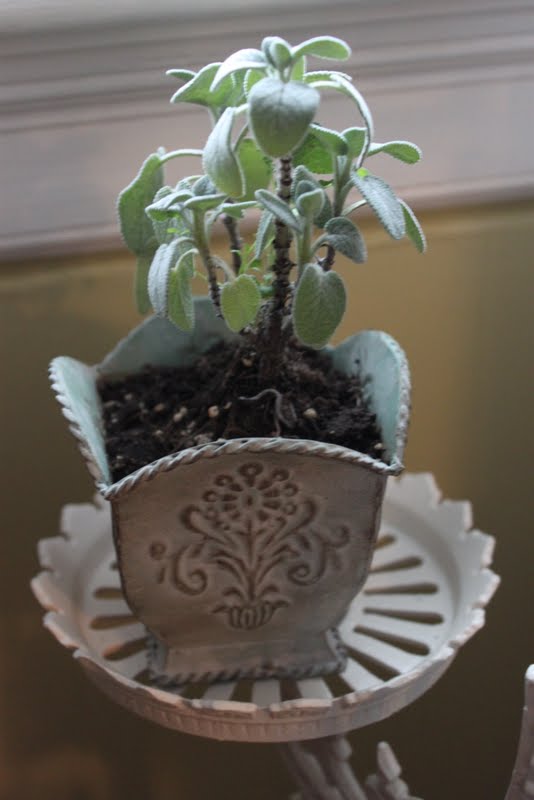
But! Now it's time to plan for this coming season. I've hunkered down in the dining room with library books and an organic gardening text recommended by a friend. I'm taking notes on what plants to grow together and what seeds to order from catalogs. And over the weekend I fell for a few pots of herbs at the farmers' market, because who wouldn't? They now sit on my great-grandmother's plant stand in the living room.
So here's my tentative plan, in containers once again:
- snap peas
- peppers
- kale and spinach
- carrots
- herbs: parsley, sage, rosemary, and thyme (try growing those together without breaking into song); lavender, oregano, cilantro, and dill
- flowers, just because
Ambitious? Yes. Doable? Uncertain. But planning the garden makes January a little less gloomy, and there's something to be said for that.
Are you planning a garden? What will you plant?
"Field Notes" notebook: Column & Stripe.
Monday, November 5, 2012
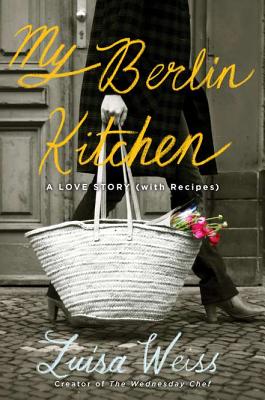
Luisa Weiss' My Berlin Kitchen
You know how there are books that grab you from the first page? You think to yourself, This is me. I see myself in this story. This was my experience with Luisa Weiss' memoir My Berlin Kitchen. I was so enthralled that I actually read the book as slowly as possible rather than zipping through it, in hopes of soaking up every word and turn of phrase.
Weiss is the creator of the popular Wednesday Chef blog, and in this memoir she recalls growing up in Boston and Berlin, splitting time between her divorced parents. Her childhood gave her a perpetual sense of homesickness, and as she learned her way around a kitchen, she began cooking as a way to reconnect with the people and places she loved. She writes simply and beautifully about trying to find her way in the world after college: her difficulties living in Paris, settling down to a publishing job and a fiance in New York, only to realize that she really wanted to be back in Berlin, where her life began. With incredible courage she said goodbye to her fiance and returned to Berlin. There she rekindled a relationship with Max, a former love who truly understood how torn she was between cultures.
My Berlin Kitchen tells a sweet and heartfelt love story, but at its core it's about belonging and how food can help create a sense of place. I recognized Weiss's decision to make Depression Stew when she felt so alone in Paris, a sort of home remedy against loneliness. I smiled at her dilemma over what to make for breakfast--cereal, pastries, or open-faced sandwiches? (Though my dilemma is not brought on by a jet-setting childhood, merely the inability to choose between so many delicious options.) And when she bought a goose for her first full German Christmas, I cheered along with her when she roasted a perfect bird.
Sometimes I feel torn between my Ohio hometown and my adopted home on the East Coast, and I've spent plenty of time working out strategies to prevent homesickness in one city or the other. My first year out of college, spent in New York City, was particularly brutal. But like Luisa Weiss, I found that cooking actually helped assuage some of that loneliness. For me it was less about recreating the tastes of home and more about keeping myself company; I could put on a DVD and cook an elaborate dinner, just for fun. Since I've started this blog, though, I've been discovering the ties between family and food. Baking a pie will remind me of my dad's stories about exploding pumpkins, or frying fish will make me think of my grandmother's careful instruction on gutting fish. Making something delicious in the kitchen can bring you closer to the people you love.
I had the great pleasure to see Luisa Weiss in person when she did a book signing in Boston, and she's just as charming and genuine as her writing. If you have a chance to pick up her memoir, do. It's one of the best books I've read all year.
(Plus, she learned how to cook by working her way through The "Settlement" Cook Book, and she grew up reading Little House on the Prairie! It's kismet.)
Weiss is the creator of the popular Wednesday Chef blog, and in this memoir she recalls growing up in Boston and Berlin, splitting time between her divorced parents. Her childhood gave her a perpetual sense of homesickness, and as she learned her way around a kitchen, she began cooking as a way to reconnect with the people and places she loved. She writes simply and beautifully about trying to find her way in the world after college: her difficulties living in Paris, settling down to a publishing job and a fiance in New York, only to realize that she really wanted to be back in Berlin, where her life began. With incredible courage she said goodbye to her fiance and returned to Berlin. There she rekindled a relationship with Max, a former love who truly understood how torn she was between cultures.
My Berlin Kitchen tells a sweet and heartfelt love story, but at its core it's about belonging and how food can help create a sense of place. I recognized Weiss's decision to make Depression Stew when she felt so alone in Paris, a sort of home remedy against loneliness. I smiled at her dilemma over what to make for breakfast--cereal, pastries, or open-faced sandwiches? (Though my dilemma is not brought on by a jet-setting childhood, merely the inability to choose between so many delicious options.) And when she bought a goose for her first full German Christmas, I cheered along with her when she roasted a perfect bird.
Sometimes I feel torn between my Ohio hometown and my adopted home on the East Coast, and I've spent plenty of time working out strategies to prevent homesickness in one city or the other. My first year out of college, spent in New York City, was particularly brutal. But like Luisa Weiss, I found that cooking actually helped assuage some of that loneliness. For me it was less about recreating the tastes of home and more about keeping myself company; I could put on a DVD and cook an elaborate dinner, just for fun. Since I've started this blog, though, I've been discovering the ties between family and food. Baking a pie will remind me of my dad's stories about exploding pumpkins, or frying fish will make me think of my grandmother's careful instruction on gutting fish. Making something delicious in the kitchen can bring you closer to the people you love.
I had the great pleasure to see Luisa Weiss in person when she did a book signing in Boston, and she's just as charming and genuine as her writing. If you have a chance to pick up her memoir, do. It's one of the best books I've read all year.
(Plus, she learned how to cook by working her way through The "Settlement" Cook Book, and she grew up reading Little House on the Prairie! It's kismet.)
Monday, October 8, 2012
This meal brought to you by Christopher Columbus
Ah, Columbus Day. I'm not sure there's any other secular holiday more filled with angst and mixed feelings than this one.
When I was little, we learned the basics of Columbus Day. We sang that catchy song, the one that goes, "In Fourteen Hundred and Ninety-Two, Columbus sailed the ocean blue..." and read picture books about the brave Spanish navigator who discovered the Americas. To me, Columbus Day always brought to mind the classic image of a stuffy European man, dressed circa the Renaissance, talking pleasantly with smiling natives who are wearing almost nothing. That's how it was taught in elementary school, at any rate.
Turns out the story went a little differently. It wasn't until middle school that I heard the first rumblings of discontent. We read Joy Hakim's entertaining histories, A History of Us, and she hinted that Christopher Columbus was not the hero he was made out to be. And in high school, I learned the full truth. Columbus treated his crew harshly, lied about who saw land first and what they found there, and kidnapped natives to lead him to gold. Later European explorers carried on his legacy by enslaving the native populations of the Americas, killing those who didn't cooperate, and laying the groundwork for future colonization.
Yet other changes were not as obvious. In the spirit of cultural exchange, European explorers took examples of American food, animals, goods, and people back to their kings and queens. In return, they brought European crops, animals, and goods to their new colonies, hoping to replicate European life on foreign soil. There's a fascinating book about how British colonists in Virginia and New England permanently changed the American landscape, simply by using European farming techniques and importing cows and pigs who dug up the soil. Old World crops and animals mixed with New World in both hemispheres. But perhaps the most devastating change was completely invisible: the syphilis, smallpox, and other Old World diseases that spread silently through the Americas. Without built-in immunity to these diseases, the native populations were decimated. Europeans could conquer the land simply by setting foot on it.
This massive exchange of culture, crops, animals, people, and disease was termed the Columbian Exchange by historian Alfred W. Crosby in the 1970s. Not only did it permanently change the newly-"discovered" lands of the Americas, it changed the Old World, too. Today we grow food and raise animals in lands where they didn't originate. It's been such a long time, and they've adapted so well, that most of the time we don't even notice.
So, because I can't leave well enough alone, I decided to cook a Columbian Exchange dinner. What kind of meal could I make using ingredients found mostly at my farmers' market? What would that tell me about the extent of the Exchange?
Quite a lot, as it turns out.
After collecting our goods at the farmers' market and rounding out the ingredients at our local grocery, Josh and I made:
Granted, a little fancier than our normal weekend dinners, but none of the ingredients were particularly exotic. But let's look at how those three dishes break down. Where did their ingredients originate?
When I was little, we learned the basics of Columbus Day. We sang that catchy song, the one that goes, "In Fourteen Hundred and Ninety-Two, Columbus sailed the ocean blue..." and read picture books about the brave Spanish navigator who discovered the Americas. To me, Columbus Day always brought to mind the classic image of a stuffy European man, dressed circa the Renaissance, talking pleasantly with smiling natives who are wearing almost nothing. That's how it was taught in elementary school, at any rate.
Turns out the story went a little differently. It wasn't until middle school that I heard the first rumblings of discontent. We read Joy Hakim's entertaining histories, A History of Us, and she hinted that Christopher Columbus was not the hero he was made out to be. And in high school, I learned the full truth. Columbus treated his crew harshly, lied about who saw land first and what they found there, and kidnapped natives to lead him to gold. Later European explorers carried on his legacy by enslaving the native populations of the Americas, killing those who didn't cooperate, and laying the groundwork for future colonization.
Yet other changes were not as obvious. In the spirit of cultural exchange, European explorers took examples of American food, animals, goods, and people back to their kings and queens. In return, they brought European crops, animals, and goods to their new colonies, hoping to replicate European life on foreign soil. There's a fascinating book about how British colonists in Virginia and New England permanently changed the American landscape, simply by using European farming techniques and importing cows and pigs who dug up the soil. Old World crops and animals mixed with New World in both hemispheres. But perhaps the most devastating change was completely invisible: the syphilis, smallpox, and other Old World diseases that spread silently through the Americas. Without built-in immunity to these diseases, the native populations were decimated. Europeans could conquer the land simply by setting foot on it.
This massive exchange of culture, crops, animals, people, and disease was termed the Columbian Exchange by historian Alfred W. Crosby in the 1970s. Not only did it permanently change the newly-"discovered" lands of the Americas, it changed the Old World, too. Today we grow food and raise animals in lands where they didn't originate. It's been such a long time, and they've adapted so well, that most of the time we don't even notice.
So, because I can't leave well enough alone, I decided to cook a Columbian Exchange dinner. What kind of meal could I make using ingredients found mostly at my farmers' market? What would that tell me about the extent of the Exchange?
Quite a lot, as it turns out.
After collecting our goods at the farmers' market and rounding out the ingredients at our local grocery, Josh and I made:
- Roasted squash and shallot salad
- Pork chops with roasted apples and onions
- German chocolate hazelnut cake
While our dishes were certainly heavy on the Old World influence, it's telling that some of the main ingredients originated in the New World. There's thought that chickens might have originated in both the New World and the Old World (or, really, developed before the Americas were cut off from Eurasia).
The other interesting thing about this is how many of the above ingredients I was able to get at our farmers' market. Providence is big about buying local, and from the Pat's Pastured pork chops to shallots and onions, from apples to sage, a lot of the "Old World" ingredients are now grown "locally" in Rhode Island. I say "locally" because, yes, they are grown in Rhode Island. At this point, for example, apples are practically a native species. But before the Columbian Exchange, you never would have found them here. And that's a sobering reminder of all the other horrific and massive changes that occurred because of it.
Tell me, is there anything on this list that surprises you? And what do you think of Christopher Columbus?
Works cited: Guns, Germs, and Steel by Jared M. Diamond. 1493: Uncovering the World Columbus Created by Charles C. Mann. A People's History of the United States by Howard Zinn. The Columbian Exchange: Biological and Cultural Consequences of 1492 by Alfred W. Crosby, via National Center for History in the Schools instructional resource Three Worlds Meet: The Columbian Encounter and its Legacy.
Labels:
adventure,
books,
cheese,
dessert,
fall,
grains,
history lesson,
holidays,
meat,
vegetables
Tuesday, September 4, 2012
Canning fruit (II)
Yesterday I recounted how my friend Nina and I decided to can 40 lbs of tomatoes. When I left off, we had just realized how much time (and patience) this project required.
Nevertheless, we persevered. Once the crushed tomatoes had boiled, we started ladling them into our sterilized Mason jars (prepped with lemon juice to prevent evil bacteria from forming. Botulism is no joke).
Then came the fun part: lowering the filled jars back into the boiling water of the canning pot. This is what seals the jars and prevents more bacteria from forming.
After that, we let them all boil for 40 minutes while we maybe talked to them a little bit. Because they looked so cozy sitting together, and it can't hurt to encourage them.
However, by the time the sauce was ready, we had been at this canning project for 5 hours and I had plans for dinner. So courageous Nina finished the project on her own, documenting the final stages for posterity. We haven't counted the jars yet...but suffice it to say, we'll be eating a lot of tomatoes this winter.
![]() |
| photo by Nina |
This adventure reminded me why canning is so special.
- First, you get to preserve the tastiest fruits and veggies from your garden (or your farmer's garden), to enjoy long into the winter.
- Second, it brings people together. My friend Emily first taught me how to can, before I'd started this blogging project and dedicated myself to testing out homesteading methods. We made a batch of strawberry jam, and by the end of the afternoon I was a goner. It seems to be one of those skills that people pass on to one another, through afternoons in the kitchen or community classes. It helps bring people together.
- Third, even if you can by yourself, you can give your gorgeous Mason jars as gifts (see holiday plans above).
- Fourth (you knew this was coming), it's one of the most practical ways of carrying on historical cooking methods.
Intrigued? Want to try it yourself? Emily's written an excellent guide to canning your own jam, and I suggest you check it out if you've never canned before and want to try it.
Labels:
adventure,
books,
canning,
homesteading,
lessons learned,
summer
Monday, September 3, 2012
Canning fruit (I)
Last Sunday, over dinner at our local Ethiopian restaurant, my friend Nina said, "When can we can?" And thus began a rather silly and ultimately fruitful (heh) endeavor of canning 40 lbs of tomatoes. And making lots of canning jokes. ("Yes, we can" is Nina's favorite.)
Canning is a fascinating process. Before refrigeration, it was one of the best ways for home cooks to preserve the bounty of their gardens long into the winter. Now that we can easily freeze leftover fruits and veggies, canning has become more of a fun way to preserve food than a necessity. Plus, along the way it's acquired an exotic sort of aura. Not everyone knows how to can, and the uninitiated tend to see it as a complicated art that requires years of practice. The funny thing is that it's pretty easy. It just takes time, patience, and a strict adherence to directions. Sort of like ice cream.
Here are the basics:
- You prepare your fruit for canning (and yes, tomatoes are a fruit). You can do this however you wish; we used a few recipes from Liana Krissoff's excellent Canning for a New Generation.
- Meanwhile, you should heat up a large pot for processing the cans, and wash the jars and lids you'll be using.
- When the water in the canning pot is hot, you slip the jars in to keep them hot and sterilized until you ladle in the fruit.
- Once you've put the fruit in the jars, you set the jars back into the boiling water of the canning pot to process. This is the part that seals the jars to make them safe for storage.
So it's not such a difficult process. It just takes a lot of pots and pans. And, as we discovered, tomatoes in particular need a lot of time to process. They're finicky fruits, those tomatoes.
Nina and I blithely set out to spend yesterday afternoon putting up tomatoes for the winter. Nina's farmshare gave her an excellent deal on tomatoes, and I picked up a few pounds more to even out the numbers. This meant that we had 40 lbs of tomatoes all together.
40 lbs of tomatoes is a lot of tomatoes, friends. Especially if you've only canned twice before, like me, or never, like Nina. This is the point where we began to worry that the afternoon would resemble an episode of I Love Lucy.
Nevertheless, we soldiered on. We set up our army of pots (my canning pot took up 2 burners alone) and boiling water, and arranged an assembly line to peel the tomatoes and prepare them for cooking. We planned on making tomato sauce, which required 45 minutes of simmering before it could be canned, and crushed tomatoes, which only needed 5 minutes. So naturally we began work on the tomato sauce first.
However, by the time we'd finished peeling and crushing the 24 lbs meant for the sauce, the canning pot was ready for processing (understandably, since it was an hour and a half later). So we decided instead to prepare the crushed tomatoes for efficiency's sake. This took another half an hour of peeling, plus managing which pots would fit on which burners and waiting for the tomatoes to boil. We didn't actually start processing the filled cans until 3 hours into our canning adventure.
And yes, at this point we'd cracked open a couple of beers and I was sighing, "No, we can't."
Would we manage to can all 40 lbs of tomatoes before the end of the afternoon?
Would we lose our minds?
Would we not do it correctly and poison ourselves and everyone we knew with botulism?
Check back tomorrow to find out!
Would we lose our minds?
Would we not do it correctly and poison ourselves and everyone we knew with botulism?
Check back tomorrow to find out!
Labels:
adventure,
books,
canning,
fruit,
homesteading,
lessons learned,
summer
Thursday, August 30, 2012
To make ice cream
It's been a busy summer, one full of transitions: family milestones, a move ten minutes down the road, exotic travel, a new school. This week I've been focusing on that last one, a new school, as we get ready for classes to start next week. There's a new commute to learn, a new curriculum to design, new/old books to dig out of storage in the school's makeshift building. I'm excited, but as you well know, I also have a hard time dealing with transitions. Especially when these transitions come with challenges.
Luckily the big challenges seem to be reserved to the new home so far (like major water pipes bursting at 7 at night because the city of Providence is doing construction work on our street). Normally this would be a minor annoyance. But when the past three months have felt like one massive bundle of changes, it turns into a big frustration. Like, crying-worthy (don't worry, I didn't cry over the loss of water pressure....but I thought about it).
Even cooking, my old standby, has been hit with the new house challenge bug. A few days ago I decided to try out an ice cream maker given to us by Josh's grandmother. I'd recently gotten a copy of Jeni's Splendid Ice Creams at Home and was dying to try out at least half of the recipes straight away. What better time to try out the ice cream maker?
Hah. Well. A better time may have been once things settled down and I didn't feel like crying at the drop of a hat. As it turns out, ice cream making is a little trickier than the manual makes it sound.
First, some background: Jeni Britton Bauer founded Jeni's Splendid Ice Creams in Columbus, OH, after years of experimenting with homemade ice cream. Her business has grown to 9 shops in Ohio and 2 in Tennessee, and just last summer I discovered that one of those shops happened to be in my hometown. With flavors like Salty Caramel, Queen City Cayenne (spicy chocolate), and Lemon and Blueberries, it was like a revelation. I went basically every day I was home that summer.
And now there's a cookbook! I ambitiously decided to make her Sweet Corn and Black Raspberry ice cream instead of continuing to unpack in the new apartment (YOU tell me which one sounds like more fun). And I quickly discovered that when you haven't used an ice cream maker with a frozen canister before, that canister has to be frozen for a full 24 hours before you use it. Otherwise your beautiful, creamy mixture scented with corn will refuse to freeze. It will instead be slightly thicker than when you started, and you'll have to stick it in the back of the freezer to force it to harden, and it will turn icy after a few days.
Again, I thought about crying.
However, the ice cream was delicious. And this setback mostly made me want to try again (with a different flavor, of course). And because I'm me, it also sent me on a hunt to discover how the Victorians made ice cream.
No one is surprised by this turn of events.
According to The "Settlement" Cook Book, making ice cream was rather more of an endeavor in the days before freezers and electricity. While references to ice cream go back to the days of ancient China and Persia, it wasn't until the late19th century that regular Americans were introduced to ice cream sodas. Ice cream sodas and sundaes continued to be rare treats until refrigeration became much more common in the early 20th century. So while there's a whole chapter on ice cream and frozen desserts in The "Settlement" Cook Book, these recipes would probably be reserved for special occasions.
And with good reason. First you had to make your own freezing mixture (Kander recommends three parts ice to one part rock salt), then place a can with the cream mixture inside the bucket that held the freezing mixture (so the cold surrounded the ice cream). After adjusting the amount of ice (it's a very careful procedure), you turned the crank steadily, letting the mixture rest periodically, until it was frozen. After that you had to make a different freezing mixture (four parts ice to one part rock salt), replace the old with the new, and let the whole thing sit for a few hours until ready to serve. Oh, and the ice cream maker should be covered "with carpet or newspaper." (For insulation?)
The whole thing sounded even riper for disaster than my own electric maker. Imagine churning ice cream by hand for half an hour! And chipping ice to pack the ice cream in! And not having a freezer!
After I read that, I felt both better about my predicament (it's not so hard to make ice cream nowadays, I can always try again) and worse (it's not so hard to make ice cream nowadays, so why couldn't I do it?). But my cooking spirit remains indomitable. And I will conquer the ice cream maker before school starts.
Luckily the big challenges seem to be reserved to the new home so far (like major water pipes bursting at 7 at night because the city of Providence is doing construction work on our street). Normally this would be a minor annoyance. But when the past three months have felt like one massive bundle of changes, it turns into a big frustration. Like, crying-worthy (don't worry, I didn't cry over the loss of water pressure....but I thought about it).
Even cooking, my old standby, has been hit with the new house challenge bug. A few days ago I decided to try out an ice cream maker given to us by Josh's grandmother. I'd recently gotten a copy of Jeni's Splendid Ice Creams at Home and was dying to try out at least half of the recipes straight away. What better time to try out the ice cream maker?
| Jeni's t-shirt, Jeni's cookbook, Jeni's ice cream |
Hah. Well. A better time may have been once things settled down and I didn't feel like crying at the drop of a hat. As it turns out, ice cream making is a little trickier than the manual makes it sound.
First, some background: Jeni Britton Bauer founded Jeni's Splendid Ice Creams in Columbus, OH, after years of experimenting with homemade ice cream. Her business has grown to 9 shops in Ohio and 2 in Tennessee, and just last summer I discovered that one of those shops happened to be in my hometown. With flavors like Salty Caramel, Queen City Cayenne (spicy chocolate), and Lemon and Blueberries, it was like a revelation. I went basically every day I was home that summer.
And now there's a cookbook! I ambitiously decided to make her Sweet Corn and Black Raspberry ice cream instead of continuing to unpack in the new apartment (YOU tell me which one sounds like more fun). And I quickly discovered that when you haven't used an ice cream maker with a frozen canister before, that canister has to be frozen for a full 24 hours before you use it. Otherwise your beautiful, creamy mixture scented with corn will refuse to freeze. It will instead be slightly thicker than when you started, and you'll have to stick it in the back of the freezer to force it to harden, and it will turn icy after a few days.
Again, I thought about crying.
However, the ice cream was delicious. And this setback mostly made me want to try again (with a different flavor, of course). And because I'm me, it also sent me on a hunt to discover how the Victorians made ice cream.
No one is surprised by this turn of events.
According to The "Settlement" Cook Book, making ice cream was rather more of an endeavor in the days before freezers and electricity. While references to ice cream go back to the days of ancient China and Persia, it wasn't until the late19th century that regular Americans were introduced to ice cream sodas. Ice cream sodas and sundaes continued to be rare treats until refrigeration became much more common in the early 20th century. So while there's a whole chapter on ice cream and frozen desserts in The "Settlement" Cook Book, these recipes would probably be reserved for special occasions.
![]() |
| 1843 vintage |
The whole thing sounded even riper for disaster than my own electric maker. Imagine churning ice cream by hand for half an hour! And chipping ice to pack the ice cream in! And not having a freezer!
After I read that, I felt both better about my predicament (it's not so hard to make ice cream nowadays, I can always try again) and worse (it's not so hard to make ice cream nowadays, so why couldn't I do it?). But my cooking spirit remains indomitable. And I will conquer the ice cream maker before school starts.
Labels:
adventure,
books,
dessert,
disaster,
history lesson,
lessons learned,
settlement cookbook
Monday, August 27, 2012
Supposedly delicious (II)
As I mentioned earlier, I love perusing the old cookbooks at
the cottage to see what earlier generations enjoyed eating. People of my
great-grandparents’ generation apparently cooked with quite a lot of lard in
the 1930s, while those of my grandparents’ generation liked to cook entire
meals in casserole dishes. (The 1950s and 1960s were apparently full of food
fads like that.) These cookbooks are also entertaining for the quaint
illustrations, like this one of a woman rolling out pastry dough in the 1960s Joy of Cooking:
I don’t know about you, but I can’t roll out dough using
just my index fingers.
A number of the 1940s cookbooks claim American home cooking
as the one thing that will win the war. The introduction to Cook It In A Casserole, 1943, argues
that by forcing a wartime economy on America, Hitler is encouraging Americans
to return to the good old casserole: “the oldest and the most satisfactory mode
of cooking.”
And of course, there are also a few recipes that give me
pause. Where I think to myself, Did readers actually eat that? And what does it
taste like? (This is the moment where I contemplate making it myself. That
moment is usually short.)
Of course, I know that many people still happily consume
organ meat today, so I’m not trying to be critical. But as a young Western cook
of the 21st century, I’m often surprised by how quickly food fads
have changed.
So what do you think? Would you try any of the recipes below?
- Baked Brains and Eggs (from The Joy of Cooking, 1967). The way the recipe title rolls off the tongue reminds me of the Monty Python Spam skit.
- Heart Pie (from Cook It In A Casserole, 1943). Sounds quaint, right? Heart pie for Valentine’s Day? Oh wait.
- Frizzled Beef a la King (from Cook It In A Casserole, 1943). It’s basically dried beef cooked with veggies, milk, and sherry. But why is it “frizzled”?
- Scrambled Brains (from The Boston Cooking-School Cook Book, 1930). Scrambled eggs for breakfast plus a special ingredient.
- Frozen Cheese Salad (from Meals Tested Tasted and Approved, 1930). Cream cheese + mix-ins, which actually sounds promising. But the title doesn’t.
- Whale (from The Joy of Cooking, 1967). The editors begin with: “Last—but vast” and go on to describe how you have to cook it like beef, “which it resembles more than it does fish.” I can’t picture a Midwestern, suburban white family of the 1960s sitting down to a meal of whale. I do want to try whale, but unless I visit a northern Native American reservation, that probably won’t happen anytime soon.
Labels:
adventure,
books,
canada,
family,
joy of cooking,
summer,
supposedly delicious,
vacation
Tuesday, July 24, 2012
Nutrition, 1903 style (II)
Yesterday I posted some of my fan-girl thoughts on Michael Pollan's In Defense of Food and presented a nutritional table from The "Settlement" Cook Book. Now I'd like to think about what this 1903 table has to do with our eating habits today.
The interesting thing about The "Settlement" Cook Book is that it's just the beginning of nutritionism, Pollan's term for focusing on the nutritional value of foods. It looks very similar to early nutritional science (developed by Justus von Liebig), which proposed that humans need only protein, fat, carbohydrates, and a few other minerals to thrive. Mrs. Kander has broken down these "macronutrients" into smaller categories, as well as identified the foods that will provide these essential nutrients.
In examining this table, you'll notice a few other interesting aspects:
So how does this translate into the rest of the cookbook?
What's striking to me about Kander's cookbook (and her informational tables) is that focus on nutritionism. By 1903, cooks were already thinking of food in terms of its nutritional value. This has to be connected to the number of recipes we see for animal products (full of protein) and starchy foods (like potatoes). And I guess it's also connected to the lack of recipes for leafy greens, which don't even make it onto the nutritional table in the first place.
It doesn't seem to promote a very healthy diet by our modern standards, that's for sure. On the contrary, the meals would look a lot like classic Midwestern food: meat and potatoes. My parents ate a lot of meat and potatoes growing up, as did a number of white, middle-class families in mid-20th century America. It makes me wonder if Kander's cookbook (and others like it) encouraged this trend in the early 20th century.
However, I hesitate to draw further conclusions about 1903 Wisconsin based on Kander's work. For one thing, it's only one cookbook (hardly representative of a nationwide trend). For another, we know she created her cookbook to train immigrants in American cooking, so there are a number of biases and assumptions about immigrants worked into the recipes. Finally, the content of the cookbook may be dictated largely by the crops grown in Wisconsin at the time, as well as the ethnic makeup of the area.
But it's a fascinating exercise in culinary history.
Of course, we haven't even touched the 9 chapters on desserts. Just a guess, but those probably couldn't be considered nutritional...
Works cited: Michael Pollan, In Defense of Food.
The interesting thing about The "Settlement" Cook Book is that it's just the beginning of nutritionism, Pollan's term for focusing on the nutritional value of foods. It looks very similar to early nutritional science (developed by Justus von Liebig), which proposed that humans need only protein, fat, carbohydrates, and a few other minerals to thrive. Mrs. Kander has broken down these "macronutrients" into smaller categories, as well as identified the foods that will provide these essential nutrients.
In examining this table, you'll notice a few other interesting aspects:
- She's not saying you should eat processed foods enhanced with these nutrients. There wasn't enough prestige attached to nutritional science yet, so there weren't very many processed foods on the market in 1903.
- There are very few vegetables on this table. Peas, beans, potatoes...apparently leafy greens were considered nutritionally useless!
- There's a lot of attention paid to meat, fish, eggs, bones, milk, and cheese.
| greens, you're useless to me. |
So how does this translate into the rest of the cookbook?
- Much of the "Vegetables" chapter is taken up by potato recipes.
- "Salads" often consist of lettuce with potatoes, meat, fish, nuts, or fruit.
- The chapters break down thusly:
- 4 chapters on meat, fish, or eggs
- 2 chapters on vegetables and salad
- 1 chapter on cereal
- 3 chapters on bread and fried cakes
- 9 chapters on desserts (!)
- a few chapters on sandwiches, beverages, and canning.
What's striking to me about Kander's cookbook (and her informational tables) is that focus on nutritionism. By 1903, cooks were already thinking of food in terms of its nutritional value. This has to be connected to the number of recipes we see for animal products (full of protein) and starchy foods (like potatoes). And I guess it's also connected to the lack of recipes for leafy greens, which don't even make it onto the nutritional table in the first place.
It doesn't seem to promote a very healthy diet by our modern standards, that's for sure. On the contrary, the meals would look a lot like classic Midwestern food: meat and potatoes. My parents ate a lot of meat and potatoes growing up, as did a number of white, middle-class families in mid-20th century America. It makes me wonder if Kander's cookbook (and others like it) encouraged this trend in the early 20th century.
However, I hesitate to draw further conclusions about 1903 Wisconsin based on Kander's work. For one thing, it's only one cookbook (hardly representative of a nationwide trend). For another, we know she created her cookbook to train immigrants in American cooking, so there are a number of biases and assumptions about immigrants worked into the recipes. Finally, the content of the cookbook may be dictated largely by the crops grown in Wisconsin at the time, as well as the ethnic makeup of the area.
But it's a fascinating exercise in culinary history.
Of course, we haven't even touched the 9 chapters on desserts. Just a guess, but those probably couldn't be considered nutritional...
Works cited: Michael Pollan, In Defense of Food.
Labels:
books,
health,
history lesson,
michael pollan,
settlement cookbook
Monday, July 23, 2012
Nutrition, 1903 style (I)
Now that we've gotten comfortable with the sorts of recipes available in The "Settlement" Cook Book, I'd like to take a look at the book's attitude towards food. Before this project (and before I did some serious thinking about food and health), I hadn't thought much about the different ways a person could view food. My mom has sometimes said that you can either live to eat, or eat to live (she's of the latter camp). So for a long time that was how I thought about food and eating (guess which camp I'm in). But Michael Pollan's In Defense of Food opened my eyes to the vastly different ways of considering food and eating, especially in this modern age of Nutrition Facts and Enriched Foods and Minerals With Fancy Long Words No One Can Pronounce.
One of the first arguments Pollan makes in his book is that in today's Western society, nutrients are considered more important than food. Scientists have reduced food down to its nutritional components, which allows big manufacturers to enrich their processed foods with the "good" nutrients, and tout their products as "healthy." So we're encouraged to eat a lot of processed foods that are Enriched and Full of Minerals And Vitamins, because these foods are "good for us." He calls this concept scientific reductionism.
Pollan's ultimate point is that it's far better to eat a limited quantity of whole foods (preferably vegetables) than to eat this host of nutritionally-enhanced products, because there are two major problem with scientific reductionism:
Pollan says all of this much more eloquently and convincingly than I ever could (and if it's not evident yet, GO READ THIS BOOK). But what matters is this: we've gone ahead and created a manufacturing empire based on science we don't fully understand.
So what does all of this have to do with The "Settlement" Cook Book?
Here is the very first page of the very first chapter of the cookbook:
There you have it. Back in 1903, Americans were already thinking of food in terms of nutrients.
Tomorrow we'll look at this fancy table in depth to see what it tells us about 1903.
Works cited: Michael Pollan, In Defense of Food.
One of the first arguments Pollan makes in his book is that in today's Western society, nutrients are considered more important than food. Scientists have reduced food down to its nutritional components, which allows big manufacturers to enrich their processed foods with the "good" nutrients, and tout their products as "healthy." So we're encouraged to eat a lot of processed foods that are Enriched and Full of Minerals And Vitamins, because these foods are "good for us." He calls this concept scientific reductionism.
Pollan's ultimate point is that it's far better to eat a limited quantity of whole foods (preferably vegetables) than to eat this host of nutritionally-enhanced products, because there are two major problem with scientific reductionism:
- We don't fully understand how the complex variety of nutrients within whole foods impacts the body. We can isolate each nutrient, but each nutrient can behave differently when consumed with the other nutrients available in, say, an apple.
- We don't fully understand how the order in which we eat foods, and how the combination of foods we eat at any one time, impacts our bodies.
Pollan says all of this much more eloquently and convincingly than I ever could (and if it's not evident yet, GO READ THIS BOOK). But what matters is this: we've gone ahead and created a manufacturing empire based on science we don't fully understand.
So what does all of this have to do with The "Settlement" Cook Book?
Here is the very first page of the very first chapter of the cookbook:
There you have it. Back in 1903, Americans were already thinking of food in terms of nutrients.
Tomorrow we'll look at this fancy table in depth to see what it tells us about 1903.
Works cited: Michael Pollan, In Defense of Food.
Labels:
books,
health,
history lesson,
michael pollan,
settlement cookbook
Monday, June 25, 2012
Boiled coffee
Anyone who knows me well can tell you that I love coffee. It's the first thing I turn to in the morning, and while I appreciate a good cup of Earl Grey, the lure of a freshly-brewed cup of coffee is often just too strong.
There's something comforting about the ritual of coffee. Wrapping your hands around a steaming mug, savoring the rich, slightly bitter taste before the day really begins. It's my preferred way to wake up.
One of my other abiding loves is the Betsy-Tacy series by Maud Hart Lovelace. It's a children's series based on the author's childhood in early 20th-century Minnesota, where the author lightly fictionalizes herself as Betsy Ray. The later books follow Betsy's adventures in high school and beyond, and they're everything that's wonderful about classic literature. Warm, comforting, friendly. I reread the high school books about once a year, and each time I yearn to be Betsy Ray.
Lovelace spends a lot of time describing the rituals of early 20th-century Midwestern life. For example, the Ray family invites their friends over each week for "Sunday night lunch:" an evening of onion sandwiches, coffee, and singing around the piano. Each part of the meal is lovingly detailed, from Mr. Ray's careful attention to creating sandwiches to the process of making coffee. Like so many activities in these books, I fell in love with Sunday night lunch. But it was the coffee that gave me pause.
Egg! In coffee! With no filter!
My grandparents affectionately referred to hot water mixed with coffee grounds as "camp coffee," but I'd never head of mixing in an egg before. It sounded weird. It sounded slightly gross. It sounded like I needed to try it.
It turns out that the method described above was America's preferred way of brewing coffee in the late 19th and early 20th centuries. The filtering method we use today was known as the "French" way, and very few Americans deigned to make their coffee this way. The egg served to clarify the coffee (since it was so muddied by coffee grounds). So of course there was a recipe for this method in the "Settlement" Cook Book, which was so focused on Americanizing immigrants. What better way than to teach them the American way of brewing coffee?
So, dear reader, I tried it. Carefully following Kander's instructions, I mixed 1 tsp of coffee with a rinsed eggshell and a bit of cold water in my shiny red teakettle. Then I added 1 cup of boiling water, and set the pot to boil for five minutes. After letting the mixture sit off the heat for ten minutes, I added half a cup of cold water, mixed the whole thing again, and poured myself a cup.
It was...less than thrilling. It tasted like incredibly weak Turkish coffee--it had all the complex, rich and bitter flavor of Turkish coffee, but like it had been watered down to a quarter of its strength.
But I was most astonished by the effectiveness of the eggshell. It worked! The coffee grounds settled to the bottom of the pot, and all that poured into my cup was brewed coffee. Magic.
Still, my morning was not the same with this pitiful excuse for coffee. Apparently I much prefer the French method. So I brewed a normal cup with my trusty Black & Decker coffeemaker, and set to the painful task of cleaning the eggshell out my teakettle.
So, what about you? Have you ever made coffee this way? Or are you a dyed-in-the-wool fan of the French method?
Works cited: Heaven to Betsy by Maud Hart Lovelace. Food in the United States, 1820s - 1890 by Susan Williams.
There's something comforting about the ritual of coffee. Wrapping your hands around a steaming mug, savoring the rich, slightly bitter taste before the day really begins. It's my preferred way to wake up.
| La Colombe coffee shop, Philadelphia |
One of my other abiding loves is the Betsy-Tacy series by Maud Hart Lovelace. It's a children's series based on the author's childhood in early 20th-century Minnesota, where the author lightly fictionalizes herself as Betsy Ray. The later books follow Betsy's adventures in high school and beyond, and they're everything that's wonderful about classic literature. Warm, comforting, friendly. I reread the high school books about once a year, and each time I yearn to be Betsy Ray.
Lovelace spends a lot of time describing the rituals of early 20th-century Midwestern life. For example, the Ray family invites their friends over each week for "Sunday night lunch:" an evening of onion sandwiches, coffee, and singing around the piano. Each part of the meal is lovingly detailed, from Mr. Ray's careful attention to creating sandwiches to the process of making coffee. Like so many activities in these books, I fell in love with Sunday night lunch. But it was the coffee that gave me pause.
"The meal was prepared by Mr. Ray... First he put the coffee on. He made it with egg, crushing shell and all into the pot, mixing it with plenty of coffee and filling the pot with cold water. He put this to simmer and while it came to a boil, slowly filling the kitchen with delicious coffee fragrance, he made the sandwiches."
Egg! In coffee! With no filter!
My grandparents affectionately referred to hot water mixed with coffee grounds as "camp coffee," but I'd never head of mixing in an egg before. It sounded weird. It sounded slightly gross. It sounded like I needed to try it.
It turns out that the method described above was America's preferred way of brewing coffee in the late 19th and early 20th centuries. The filtering method we use today was known as the "French" way, and very few Americans deigned to make their coffee this way. The egg served to clarify the coffee (since it was so muddied by coffee grounds). So of course there was a recipe for this method in the "Settlement" Cook Book, which was so focused on Americanizing immigrants. What better way than to teach them the American way of brewing coffee?
So, dear reader, I tried it. Carefully following Kander's instructions, I mixed 1 tsp of coffee with a rinsed eggshell and a bit of cold water in my shiny red teakettle. Then I added 1 cup of boiling water, and set the pot to boil for five minutes. After letting the mixture sit off the heat for ten minutes, I added half a cup of cold water, mixed the whole thing again, and poured myself a cup.
It was...less than thrilling. It tasted like incredibly weak Turkish coffee--it had all the complex, rich and bitter flavor of Turkish coffee, but like it had been watered down to a quarter of its strength.
But I was most astonished by the effectiveness of the eggshell. It worked! The coffee grounds settled to the bottom of the pot, and all that poured into my cup was brewed coffee. Magic.
Still, my morning was not the same with this pitiful excuse for coffee. Apparently I much prefer the French method. So I brewed a normal cup with my trusty Black & Decker coffeemaker, and set to the painful task of cleaning the eggshell out my teakettle.
So, what about you? Have you ever made coffee this way? Or are you a dyed-in-the-wool fan of the French method?
Works cited: Heaven to Betsy by Maud Hart Lovelace. Food in the United States, 1820s - 1890 by Susan Williams.
Subscribe to:
Posts (Atom)