Showing posts with label dining at downton. Show all posts

Wednesday, October 9, 2013

Dining at Downton: Champagne julep


There's something I've been keeping under my hat for a while, and it's time you knew: Josh and I are engaged!

We're thrilled, and despite all the chaos of starting a new school year, we couldn't be happier. We're also trying to get used to calling each other "fiance," which feels pretty weird. (Did anyone else find that?)

As we've been telling our families and friends, they have been very kindly responding with good wishes and congratulations...and Champagne. Lots of Champagne. It's pretty funny, actually, and we've been enjoying it quite a bit, when we can open the bottle. (Josh struggled greatly to open the bottle of Prosecco we used to make the following cocktail. In the end, the cork shot through two rooms and landed behind the couch. It boggles the mind!)

that dastardly cork

I can't help but think that the Crawley family would have toasted with Champagne when Matthew and Mary announced their long-awaited engagement on Downton Abbey. We never saw the family's response (because, let's face it, Matthew and Mary smooching in the falling snow is all you really needed by that point), but Champagne would have been an appropriate toast. So let's extend our little celebration to the internet via a 1920s Champagne julep, straight from The Savoy Cocktail Book.

Personally, I find this to be kind of a silly cocktail, as it's basically Champagne with sugar. Nevertheless, it's an easy and refreshing drink to make, especially if you're distracted by exciting news. Simply add Champagne (or Prosecco, as I did) to a glass with a teaspoonful of sugar, stir, and garnish with fruit or mint. And toast to your favorite celebratory news.


Champagne Julep
(slightly adapted from The Savoy Cocktail Book, via Savoy Stomp)

1 bottle of Champagne or Prosecco
2 tsp of sugar, divided
mint, to garnish
ice

Pour 1 tsp of sugar each into 2 long tumblers. Pour enough Champagne into each glass to fill, and stir to dissolve the sugar. Add ice and bruised mint. Enjoy, and top off with Champagne as needed.

Monday, September 16, 2013

Afternoon Adventure: Vanderbilt Mansion, Hyde Park


About a month ago I met up with my parents in Hyde Park, New York, for a weekend of sight-seeing and poking around historic places (this is the order of the day with my family). After touring two painters' homes on the first day, we headed to the Vanderbilt Mansion bright and early on Saturday. Now, I have seen my share of Vanderbilt mansions, and those of their friends. Living so close to Newport, it's basically a law that I have to make a yearly pilgrimage to the Breakers or Marble House. But I'd never seen the mansion in Hyde Park.

the entrance hall

Friends, it was worth it. It was the American version of Downton Abbey.

The Vanderbilts were one of the wealthiest families in the 19th century. Patriarch Cornelius Vanderbilt created a shipping and railroad empire in the early 19th century, and his children and grandchildren used that money to build magnificent mansions during the Gilded Age, following the Civil War. Only a few of his descendants used their inheritances wisely--most of the family, including those who lived at Newport, became famous for throwing money around and trying to marry their children off to British royalty. However, grandson Frederick William actually grew his inheritance, and he got to build a bunch of beautiful residences to boot. So we made our way to his "country palace" in Hyde Park.


Frederick and his wife Louise purchased the estate as a country home, and while they often entertained friends there, for the most part it was just the two of them. Well, and loads of servants.

Louise's bedroom, because we all need a gated bed

The mansion is a gorgeous example of late-Gilded Age architecture and decoration, complete with servants' quarters that mimic the design of the public rooms. The first floor, designed for entertaining, is laid out in an oval, with dining and sitting rooms fanning off to the sides. The second floor is no different, with a gallery in the center to let light filter down to the first floor. From there you can peek into bedrooms, ranging from "simple" quarters for guests to the his-and-hers bedrooms designed to look like the palace at Versailles. A few rooms were even set up as though the Vanderbilts had left for the season; white cloths covered all the furniture and only a single lamp lit the interiors.


What fascinated me about this house was the sharp contrast between upstairs and downstairs. This is Downton Abbey-speak for the employers (who lived "upstairs") and employees (who lived "downstairs") of the Gilded Age in America. Though the basement servants' floor was laid out in the same manner as the first and second floors, the decoration was completely different: dark wood free of ornamentation, small windows that didn't let in much light, simple furniture. The servants' staircase was painted silver to mark the shift from the gold in the public rooms.


A staff of over 60 kept the house running during the entertaining season, while the Vanderbilts only ever entertained, at maximum, 16 guests. It was easy to picture a Downton-like lifestyle at Hyde Park, and in a way that's what the Vanderbilts were going for.


Wealthy Americans in the 19th century longed for the class and distinction they felt came with a European background. They traveled to Europe and purchased all the old art and sculpture and furniture they could find, because they felt American art and furniture wasn't refined enough. By building such a palace and staffing it to the nines, the Vanderbilts, like many wealthy families, were trying to become European. No wonder the place felt so English!

Saturday, June 15, 2013

Two years

Dear blog,

Today you are older and hopefully wiser. (I'm not sure I am.) We've done quite a bit this past year...


Yes, we've branched out past historical cooking. We're still learning from old recipes, but we're also referencing the past more loosely, imbuing the present with old-fashioned methods, activities, and hobbies. We're visiting old mansions to look at what's survived. And I have to say, I like it.

I'm excited to see what this coming year will bring. Thanks to our wonderful readers, as always, for following along. You make it so much more fun!

Love,
Abby

Monday, June 10, 2013

Dining at Downton: Gilded crust (pain perdu)


When I took French in middle school and high school, I particularly loved the words that had both literal and figurative meanings. "Petit chou," you might call your sweetheart, meaning..."little cabbage." "Pomme de terre" was on the list of grocery store vocabulary as the humble potato, but literally it meant "apple of the earth." For someone who was beginning to love language, these little linguistic treats made French class that much more fun. (Also, we learned a lot of food words in those first few years. There may or may not have been an epic project where we created a grocery store and bought and sold paper fruits and veggies entirely in broken French. Ah, good times.)

Pain perdu was another one of those phrases that utterly delighted me. Although it refers to something akin to French toast, it literally means "lost bread." This most likely references the stale pieces of bread that would otherwise be thrown away, were they not soaked in milk and egg and fried to perfection. But it's a phrase rich with linguistic possibility, making me think, nonsensically, of orphaned pieces of toast, or bread condemned to purgatory.

(Random, yes. Sometimes that's just where your mind goes.)


While the best way to describe pain perdu is as French toast, in reality it's a little different. After soaking slices of stale bread in sugary, vanilla-perfumed milk, you then dip it in a bath of sugared, beaten eggs, after which you fry them in a hot pan. Then you sprinkle with sugar and serve as dessert after a meal. At least, this is how Auguste Escoffier, author of the Bible of French cooking around the turn of the century, described it. As a result, the Crawley family most likely would have followed his advice and eaten this dish after luncheon or a light supper instead of at breakfast.


Weird, right? I can't wrap my mind around the idea of eating French toast after dinner. And really, maybe that's the true reason we call it pain perdu--it's lost in the confusion of meals, being served at the wrong time of day. Because if you live at Downton Abbey, you can do whatever the heck you want.


Whenever you eat this "gilded crust," however (I went rogue and ate it for breakfast), it's delicious: light and crisp, perfumed with vanilla and dusted with sugar. And dipping the bread twice, first in milk and then in egg, adds a subtle dimension missing from plain old French toast. They sure knew what they were doing in the Downton kitchen.


Gilded Crust (Pain Perdu)
(adapted from The Escoffier Cookbook)

2 slices stale bread
1/2 cup milk
1/2 tsp vanilla
2 tsp sugar, divided, plus more for dusting
1 egg, beaten
butter, for frying

In one bowl, mix the milk, vanilla, and 1 tsp sugar together until blended. In another bowl, mix the beaten egg and the other tsp sugar until blended. Set a frying pan over medium-high heat and melt the butter. The pan will be ready when the butter is sizzling and a few droplets of water flung in the pan evaporate with a hiss. Just before you're ready to cook, dip the bread in the milk mixture, drain, and dip in the egg mixture and drain. Fry in the skillet until one side is brown, then flip and brown the other side. Drain on a plate and sprinkle with a bit more sugar. Serve with fruit whenever you darn well please.
Thursday, March 14, 2013

Dining at Downton: Kedgeree

Kedgeree is the very first dish served on Downton Abbey. Mrs. Patmore sends a steaming bowl up for breakfast, and with that we're immersed in the sumptuous world of Edwardian cuisine. Brits still eat kedgeree today, and it's one of those dishes that carries a few hundred years of British history along with it. Plus, the name is fascinating, since it directly reflects British colonialism.

Kedgeree originated as khichri, an Indian meal of rice and lentils, often served with chopped, hard-boiled egg. During British occupation of India, the English adapted the dish to their own tastes and eventually brought it back to the home country, where it caught on as a breakfast food. Kedgeree, as it became known (note the Anglicization), featured rice, fish, and egg, with a variety of spices and garnishes depending on the recipe. It was a great way for cooks to use up leftovers in the days before refrigeration, and it was seen as a rather "adventurous" dish. By the time Mrs. Patmore served it at Downton, kedgeree was entrenched in the British breakfast menu.

To make my own, I turned to Mrs. Beeton, that domestic goddess of the Victorian era. Surely, if anyone knew how to make kedgeree, it would be she. But after following her recipe to the letter, I did some comparison research and discovered that she is basically the only person who made it this way.


Beeton calls for leftover rice, "any cold fish," and two soft-boiled eggs, along with assorted seasonings and mustard. Every other recipe I've found, historic and modern, calls for smoked fish and hard-boiled eggs, with mustard seeds (or none at all). These are subtle but noticeable differences, friends. I can't help wondering if this is one of those old recipes where you really had to know what the writer meant in order for the dish to turn out remotely well. Like, did Mrs. Beeton mean "mustard seeds" when she called for mustard? Did "soft-boiled eggs" back in the Victorian day actually mean "hard-boiled"? In other words, is this recipe just code for a completely different recipe?

We'll just have to keep on wondering.

I've set down my version of Beeton's recipe below, and it's not bad. I used cod, which has a pleasant, mildly fishy flavor, and the seasonings and egg actually blend nicely. But it bears little resemblance to anything that originated in India.


Kedgeree
(adapted from Mrs. Beeton's Book of Household Management)

1/2 lb cod fillet
1 1/3 cup brown rice, cooked
2 tsp mustard
2 eggs
1 tsp butter, cubed
salt and cayenne pepper, to taste

To make the fish:
Set the fish in a pot and cover with cold water. Set the pot over a high flame and bring to a boil. Immediately remove from the heat and let sit for ten minutes. Remove the fish and let cool.

To make the eggs:
Boil a small pot of water over high heat. As soon as the water boils, turn the heat down to a simmer. Crack the eggs in a small bowl and slip into the hot water, using the side of the pot to guide the eggs into the water so they don't break. Cook for 5 minutes and remove from water.

To make the kedgeree:
Flake the cooked fish into small pieces. Mix with the brown rice, mustard, eggs, and butter. Add salt and cayenne pepper to taste. Serve hot.

Monday, March 4, 2013

Dining at Downton: Flying Scotchman Cocktail

I don't know about you, but I'm still recovering from the season 3 finale of Downton Abbey. To be fair, I'd had some warning; my sister told me of Dan Stevens' plans to leave the show long before that last episode. Josh and I spent the whole season discussing when and how the writers would bump him off. (Which was part of the fun: "There will be a shooting accident! No, he'll have to go abroad to get the inheritance! No, a car crash!")

In the end, the writers get us right in the gut, just as Matthew is reveling in his new fatherhood. You'd think that no one would ever have children on this show, if only because of the high rate of new parents dying off. Oh, Sybil, I still miss you!

While I wasn't as devastated by Matthew's death as by Sybil's, I'm still getting my sea legs back after that punch of a finale. So I thought we could focus on happier times: namely, intrigue at the family retreat in Scotland. (Who else loves the fact that the Crawleys have a family member named Shrimpy?)

Drama abounds in Scotland, from cousin Rose's scandalous attire to Shrimpy's failing marriage to Anna's attempts to learn the reel. And then there's Molesley, drunken belle of the ball. A competitive lady's maid tries to trick O'Brien into getting drunk at the big ball, all to get back at her for knowing just how to do Her Ladyship's hair. But the trick goes awry and Molesley downs the cocktail, which sends him whirling gleefully around the dance floor. It's one of my favorite parts of the episode.

While the suspect drink was most likely punch spiked with whiskey, the guests might as well have been sipping the Flying Scotchman Cocktail. Made with Scotch and vermouth, this cocktail is just one of the many drinks written up in The Savoy Cocktail Book, a 1930s collection of recipes from The Savoy hotel. Back in the 1920s and 1930s, it was all the rage to have a drink at The Savoy when one was in London--just ask Fred Astaire, George Gershwin, and Noel Coward.

I like this cocktail on the sweeter side, but you can adjust the amount of sugar syrup to your liking. Just make sure to drink a toast to poor, hapless Molesley when you try it.


Flying Scotchman Cocktail
(from The Savoy Cocktail Book, as featured in Savoy Stomp)

serves 2

2 oz vermouth
3 oz Scotch whiskey
3-4 dashes Angostura bitters
1 tbsp sugar syrup (2 parts sugar to 1 part water)

Shake vermouth, Scotch, bitters, and 1 tsp of the sugar syrup in a cocktail shaker with ice. Strain into 2 cocktail glass. Add sugar syrup to taste.

Thursday, February 14, 2013

Dining at Downton: Irish stew

I am known to get emotionally involved with fictional characters. When they fall in love, I swoon around the house. When they suffer heartbreak, I moan along with them. When they struggle to figure out what they really think about an important issue, my mind gets muddled and filled with conflicted emotions. When they die, I am crushed.

Devastated.

Yes, I am talking about Downton Abbey. No major spoilers here, but after episode 4, I lay on the couch for about half an hour babbling about how my heart had been ripped out and stomped on. How unfair this latest twist was! How could the writers take away one of my favorite characters! Death in the WWI trenches, I could understand. The Spanish flu, I could see coming. But this? My friends, it's been over two weeks and I'm still recovering.

As viewers, we're entitled to some serious comfort food to help us deal with this latest tragedy. And it's also time to give Branson his due.

Branson--or "Tom," as the more enlightened family members have to remind others to call him--burst into Downton as the revolutionary Irish chauffeur. Now that he's married Lady Sybil with the dubious blessing of Lord Grantham, he's slowly becoming a full-fledged member of the Crawley family. And this most recent twist of fate has him growing up fast. He's finding the right time to be a rebel and the right time to smooth things over with the family, and it's hugely gratifying. As one of my colleagues said, when hinting at things to come in Downton Abbey, Branson really stands up in this season. In just a few episodes, he's become one of my favorite characters.

So, in honor of Branson, and to soothe our aching hearts, I've put together a comforting Irish stew that our former chauffeur would be glad to find at the dinner table. It's an incredibly simple, easy recipe, one that calls for a few hours of simmering on the stove. With just six ingredients, I wasn't expecting much, but the slow cooking lets all the flavors melt together. The result is a tender, rich lamb stew that falls apart at the touch of a spoon.


Also, in case you're like me and need newspaper articles to remind you that none of this is, in fact, real, here's a fun interview with the actress who plays Mrs. Patmore. She talks about who actually does the cooking on set, and how much of the kitchen is functional, and who corrects the kitchen hierarchy when it goes awry. Who knew Mrs. Patmore was the Gordon Ramsey of her day?


Irish Stew
(adapted from Mrs. Beeton's Book of Household Management)

1 1/2 lbs lamb shoulder on the bone (the original calls for mutton, but lamb will do just fine)
3 cups water, with more at the ready
2  lbs russet potatoes, peeled
2 yellow onions
salt and pepper to taste

Place the lamb shoulder in a medium Dutch oven, sprinkle with salt, and pour in the water. If needed, add more water to just cover the lamb. Bring to a boil over medium-high heat. Reduce to low heat, and let simmer, covered, for 1 hour. Meanwhile, slice the potatoes and onions thinly.

Remove the lamb from the Dutch oven and cut the meat off the bone into small, 1-inch chunks. Skim the fat off the broth in the pot. Place a layer of potatoes in the bottom of the pan, and cover with a layer of onions. Scatter the meat on top and sprinkle with salt and pepper. Cover with another layer of potatoes and onions and sprinkle with salt and pepper. Bring the stew to a boil over medium-high heat, then reduce to low heat, cover, and let simmer for 1 hour. Stir occasionally to prevent bottom layer from burning.

Serve with fresh bread and cheese, plus plenty of beer to soothe your aching heart.

Monday, January 7, 2013

Dining at Downton: Fried oysters

How many of you watched the Season 3 premiere of Downton Abbey last night? We did, after some technical difficulties, and it was every bit as lavish and funny and swoony as we'd hoped. While a certain someone (cough Josh cough) kept inserting comments about one character's rumored departure from the show, I was on tenterhooks every time it seemed like things were finally going right for the Crawleys. This show, I tell you! Every time you think it's going to end happily, someone dies or loses their reputation.

Last night's episode also provided an inside glimpse at the complicated dining rituals at Downton, courtesy of O'Brien's clumsy nephew. He's been hired as a new footman, but since he trained as a hotel waiter, he bungles the dinner service. Instead of offering a dish and allowing each diner to serve him or herself, he tries to place the vegetable or fish directly onto the diner's plate! Oh, the horror! Who knew that dinner was so fraught with peril?

(Then again, Branson would surely agree with that sentiment.)

For families like the Crawleys, it was fashionable to dine a la russe, or in the Russian style. Rather than serve all courses on the table for diners to help themselves (service a la francaise), staff would bring each course out individually. With the butler supervising, footmen would serve guests from the left, allowing them to take what they wished from the proffered plate.

It seems like a lot of extra work, with too many complicated rules, but that was exactly the point. Dining a la russe allowed hosts and hostesses to show off their wealth--"Look! I can afford this many footmen!"--as well as their social status. The host would give the signal for all guests to eat, stop eating, and for each course to be served. It was the perfect environment for a host accustomed to power.

Not surprisingly, it was also the perfect environment for new footmen to mess up. And though the Crawleys might gloss over the footman's mistake in front of their guests, that kind of difficulty showed the cracks in a family's perfect facade.

Josh and I dined in a more modest environment last night (i.e. the couch and coffee table), but our meal was no less elaborate. I bought a dozen oysters from the Matunuck Oyster Bar stand at the farmers' market, and proceeded to learn quite a lot about how to open oysters without an oyster knife. It's tricky! In the end, I resorted to heating the oysters in the oven for a few minutes, then prying them open with a butter knife. That did the trick, but it also turned me forever against preparing oysters at home.

This recipe, taken from Mrs Beeton's Book of Household Management, would have been well-received at the Crawleys' dinner table. It's basic, using only a few ingredients (and who knew the Victorians used ketchup?), but the taste is sublime. Buttery, salty, with a hint of the sea.

And thankfully, Josh and I don't care if one of us bungles the dinner service.


Fried Oysters
(adapted from Mrs Beeton's Book of Household Management)

1 dozen oysters, scrubbed
2 tbsp butter
1 tsp ketchup
1 tsp lemon juice

Open the oysters. If you need to do it the MacGyver way, heat the oven to 400 F. Set the scrubbed oysters in a pan in the oven for 5-7 minutes, then dunk them in a bowl of ice water and drain. Hold each oyster in the palm of your hand, deep shell down, and use a butter knife to pry the hinge of the oyster apart. Drain the liquid into a bowl and scrape out the oyster meat into the same bowl.

Heat the oysters and their liquid in a small pot until boiling. Boil one minute. Drain the liquid. Heat the butter in a small frying pan over medium heat until sizzling, then cook the drained oysters for 3-4 minutes. At the end of cooking, stir in the ketchup and lemon juice until oysters are evenly coated. Serve immediately.

Friday, January 4, 2013

Dining at Downton: What to eat while watching Season 3

I'm counting down the days until the premiere of Season 3 of Downton Abbey in the U.S. this Sunday night. I've been steadfast, refusing to watch uploaded episodes from the U.K. or to search down spoilers. And yesterday my excitement reached epic proportions: while I was driving to work, NPR's Morning Edition interviewed the actors who play Lord and Lady Grantham and Carson the butler. When they announced the interview, I shrieked.

Thank goodness for the privacy of my car.

I'm not alone. Lately it seems every newspaper and online journal features articles about the history behind Season 3, gossip about the stars, and, of course, what foods to eat while watching the premiere. (In case you're wondering: Season 3 takes place in the early 1920s. Expect daring fashions and continued rationing.)

I've compiled a collection of articles and blog posts recommending what to serve at a Downton Abbey viewing party (even if your viewing party consists of just yourself). Some are more historical than others, but it's all a matter of taste (heh).

As for me, I'll be serving oysters, based on a recipe from Mrs. Beeton, that Victorian domestic goddess. The Edwardians loved oysters, and for me they're a rare treat. I'll tell you how they turn out next week.

Do you have any special plans for the premiere of Season 3? I'd love to hear!

Thursday, December 27, 2012

Dining at Downton: How to serve plum pudding


We had a relatively quiet Christmas here in Ohio, seeing family and telling funny stories and going for long, snowy walks and eating good food. As per tradition, we served plum pudding for dessert on Christmas night, along with a lot of other treats (frosted cookies, red velvet cake, petit fours...). We don't mess around with dessert.

As I mentioned a few days ago, the serving of plum pudding is half the fun. Once you've steamed the pudding so it's nice and hot (2 hours at 350 degrees, back in the mold and the double boiler you set up to cook it the first time), you turn the pudding out into a heat-resistant dish. Heat up a little brandy on the stove, pour it evenly over the pudding, and hold a lit match close to the pudding. The fumes from the brandy should pick the flame right up and set the whole pudding alight. In a darkened room with all the family sitting around a candle-lit table, there's nothing quite like it: blue flames dancing around the dish, creating a magical feeling.


Unfortunately, our evening did not go exactly according to plan.

The brandy we ended up using was just too old, so the flames died out almost immediately. Here is the only picture we could get of bringing the pudding to the table--if you look closely, you might see the blue flames as they dwindled to nothing.


That doesn't mean the pudding wasn't delicious, though! The days it spent ripening in the cold did it good, and the pudding was light and fruity with a citrusy zing. It had a tender, spongy crumb that contrasted well with dabs of rich hard sauce.

If you celebrated the holidays this December, I hope you enjoyed equally delicious food and fun company. (I also hope that your projects went a little more according to plan than mine!)


Previously:

Monday, December 24, 2012

Dining at Downton: How to steam plum pudding

On Saturday we talked about how to make your own plum pudding, the most classic of British holiday desserts. (Yes, I am still wondering where the plums are in the recipe.) Today we'll discuss the cooking process, which is a rather elaborate steaming method. It requires parchment paper, cooking twine, a water bath, and lots of patience.

My dad was fascinated by the process from start to finish. He's an engineer by trade, and he's the kind of cook who loves the science of the kitchen. He will turn out renditions of his mother's pumpkin pie recipe until he has the ingredient ratio just right (much to my mom's dismay). He will collect recipes for beef bourgignon and combine instructions from each to make the best possible stew. He will then exchange observations on the proper way to brown beef with me over the phone. (He also went to great lengths to find out why the one American manufacturer of plum pudding stopped producing it, which is how I ended up making the pudding in the first place.) Put simply, my dad likes method.

"You should take photos of that!" he said as I removed the steaming pudding from the water bath. "And how did you tie the parchment paper down again?"

As he noted, this is a delicate process. So here are your highly expert instructions, just the way my dad likes them.

Step One
Preheat the oven to 350 F.

Once your pudding is mixed and ready to cook, turn the mixture into a well-greased pudding mold or glass bowl. Remember, a pudding mold looks like a Bundt pan, with a ring in the middle to ensure proper steaming. I got mine at Stock, a lovely little cooking shop that recently opened in Providence.


Step Two
Next, cut a piece of parchment paper to cover the top of the mold. Leave about six inches of overhang on all sides of the mold. Fold the paper twice in the middle to create a slight overlay--this will allow steam to accumulate without tearing the paper.

Step Three
Cover the mold with the parchment paper and use a length of cooking twine to tie the paper to the mold, just below the rim. Trim excess paper.


Step Four
Create a handle for the mold, so you can lift it out of the steam bath. Cut a long length of cooking twine and wrap it around the mold as though wrapping a present, laying the twine flat across the top, bringing it down the sides of the mold and crossing underneath. Bring the twine up to the top again on the empty sides of the mold, and slide the twine underneath the cross line on top of the parchment paper. Tie the ends of the string together to create a looped handle.


Step Five
Pour hot tap water into a large stockpot or Dutch oven (I used the latter) that can accommodate the mold with at least an inch of space on all sides. Fill with water so the oven is about 1/3 full. Place the prepared mold in the Dutch oven and cover the whole thing with the oven lid. Put in the oven to steam for about 3 hours. It will make your house smell like citrus and deliciousness.


Step Six
Periodically check the oven to make sure the water hasn't evaporated completely. You may need to pour in more water. When the pudding pulls away from the sides of the mold (about 3 hours), it's done. Carefully remove from the water bath using the string handle, and lift up the parchment paper to make sure the pudding is ready. Cool in the mold completely before turning out onto a plate.

Step Seven
Now that the pudding has cooked, you can eat it straight away or let it ripen over time. If you choose to let it sit, cover the cooled pudding and store in a cool, dark place (we put it in our 1960s-era bomb shelter) until ready to eat. Pudding will keep for at least five weeks. Be sure to warm it before serving by replacing it in the mold or bowl, then steaming for about 2 hours at 350 F.

The very last segment of this culinary adventure is my favorite: setting the pudding on fire at the table! Check back in a few days for photos of our own flaming pudding. (If you want to serve your own pudding before then, warm a small amount of brandy on the stove, then pour over the warm pudding. Immediately hold a lit match close to the pudding, and the brandy will catch on fire. Bring to the table in a darkened room for maximum effect and applause. Once the flames have died, serve with brandy butter or hard sauce.)

Note: It's possible to steam the pudding with a Crockpot instead of in the oven. See this page for complete instructions.


Works cited: Irish American Mom. Pittsburgh Post-Gazette.

Saturday, December 22, 2012

Dining at Downton: How to make plum pudding

This time of year, my family is all about tradition. Previously I wrote about the Brunswick stew we've kept from my mom's side of the family, though I tested out a Williamsburg variation of the recipe. That's still on the menu this year. My sister and I maintain important traditions like decorating the tree while listening to a BBC dramatization of Hercule Poirot's Christmas (because nothing says the holidays like a murder mystery), and she will read the January issue of Vogue on Christmas Eve. Our family is still adjusting to some major changes that took place this year, but we're determined to maintain the key rituals. How else will we know it's Christmas?

Vital to our Christmas Day dinner is the plum pudding. Another hold-over from my mom's side of the family, it draws on our English heritage and recalls the classic Charles Dickens Christmas. If you haven't tried plum pudding before, it's basically a soft cake filled with dried fruit, nuts, and (most importantly) booze. It's so historical that a mention of plum pudding first appeared in 14th-century England. 14th-century! That's 1300. Clearly, England has had plenty of time to perfect the recipe. The "modern" version of plum pudding, complete with dried fruit and suet (beef fat), probably came to England with Prince Albert when he married Queen Victoria in the 19th century.


So the Crawleys definitely would have served this kind of plum pudding at their Christmas feast. Mrs. Patmore would have begun the cooking process five weeks before Christmas, since it's an elaborate pudding (the British term for "dessert") that requires a lot of time and energy. Additionally, it's the kind of dessert that tastes the best when it's been around for a few weeks--that way the dried fruit can absorb the alcohol and the whole pudding gets nice and brandified. The alcohol also gives it a long shelf life, so you just need to let it sit in a cool, dark place. Traditionally, cooks made their puddings on the Sunday right before Advent, known as "Stir Up Sunday." (This is such a tradition that the Telegraph, a U.K. newspaper, published an article a few years ago about how few British citizens make their own puddings now. The horror!)

I am not nearly as well-prepared as Downton's cook, so I made mine on Saturday afternoon. It won't be quite as tasty with only a few days of ripening time, but we'll still enjoy it. You can even make yours the day of. Today you'll read about the preparation process, but I'll save the cooking process for a separate post. (I meant it when I said this was an involved recipe.)


Some notes before we begin:

  • You'll need a pudding mold to turn the batter into once it's ready. A pudding mold looks a lot like a Bundt pan, but it's ceramic or glass rather than metal. A Bundt pan, I have been assured, will not work. If you don't have a pudding mold, an oven-safe glass bowl will do the trick.

  • I adapted a recipe from a French classic that Mrs. Patmore certainly referred to (what with the Edwardians' obsession with French food). The changes are few but important.

    • First, I substituted butter for the suet. I was all set to use actual beef fat, but my mom was hesitant. Butter does just as well.

    • Second, I cut the ingredients in half, and it still produced way more batter than I was prepared for. Be sure to have a few glass bowls on hand in case your designated mold is filled too early.

my pudding mold

But don't be scared! Plum pudding just takes some careful preparation, and it's well worth the effort. Think of it as a culinary adventure!


Plum Pudding
(adapted from Escoffier: Le Guide Culinaire)

1 cup + 2 tbsp butter (or chopped beef suet)
1 cup + 2 tbsp breadcrumbs (I used leftover bread)
2/3 cup all-purpose flour
2/3 cup peeled, chopped apple
2/3 cup mixed raisins and sultanas
2/3 cup brown sugar, packed
2 tbsp chopped, crystallized orange peel (I used leftover orangettes)
2 tbsp ground ginger
1/2 tsp ground cinnamon
1/4 tsp ground nutmeg
1/4 tsp ground cloves
2 eggs, beaten
2/3 cup stout (I used Guinness)
1/3 cup brandy
juice and zest of 1/4 lemon and 1/4 orange

First:
Soak the raisins and sultanas in the brandy. You can do this overnight or an hour or two before preparing the mixture.

Second:
Prepare all the other ingredients. If using butter, melt over low heat. If using beef suet, chop it up into small pieces.

Mix the flour, breadcrumbs, brown sugar, and spices together in a large bowl. Then add the apple, crystallized orange peel, and citrus zest. Mix well. Finally, add the citrus juice, butter, eggs, and soaked raisins together with the remaining brandy. Add the stout at the very end, and mix until just incorporated.

Third:
Pour the batter into buttered pudding molds or glass bowls, filling until about 2/3 full. Stay tuned for the next post, where we cook the pudding!


Works cited: The Telegraph.

Tuesday, December 18, 2012

Dining at Downton: Mulled wine

It's getting to be that time when I start glancing at the calendar to see how many days are left. Not before Christmas (though that's another kind of concern) but before the premiere.

Yes, you know. The U.S. premiere of Downton Abbey Season Three.

January 6! That's less than a month away!

Josh and my sister and I can barely contain our excitement. I will probably need to review the first two seasons before that fated day in order for the story to be completely fresh in my mind. This kind of viewing--leisurely, paced, because I already know what happens--calls for something special to spice it up.

I'm talking mulled wine.

This recipe is particularly appropriate for the Downton Christmas special. I can imagine the Crowleys sipping mugs of spiced, mulled wine by the fire while they discuss the punch-up between Matthew and Sir Richard. Perhaps Mary and Matthew warmed themselves up with a tipple after their mutual declarations of love. It's the perfect thing for a cold, blustery evening, even if your winter's night features only British TV dramas and central heating. (I really do appreciate the modern comforts of home.)

I recently brewed a batch of mulled wine for a holiday party, pulling inspiration from Escoffier: Le Guide Culinaire (a cookbook Mrs. Patmore probably used) as well as from the latest issue of Bon Appetit. The Escoffier recipe is fairly mild, calling for only "zest of 1 lemon, a small piece of cinnamon and mace and 1 clove." I suppose a light hand with the spice makes sense, given the famed Victorian aversion to flavor. Since modern tastes are more adventurous, I added a few more cloves, some tangerines, and orange peel to boot. The result, I think, was well worth the tampering.


Mulled Wine
(adapted heavily from Escoffier: Le Guide Culinaire and Bon Appetit)

2 750-ml bottles of red wine (it doesn't have to be fancy)
3/4 cup sugar
1 1/2 cups apple cider
2 cinnamon sticks
2 tangerines
16 - 20 whole cloves
1 tsp dried orange peel
pomegranate seeds for garnish

Pour the red wine over the sugar in a large, heavy-bottomed pot. Heat over medium-low heat, stirring occasionally, until the sugar is dissolved. Add the cider.

While the liquid heats, prepare the tangerines. Press the cloves (by the sharp end) into the tangerines, using about half the cloves for each tangerine. This way you don't have to strain out the cloves later on.

Place the tangerines, cinnamon sticks, and orange peel in the wine mixture. Heat until steaming, then cover and turn the heat down to low. Serve after twenty minutes, garnishing with pomegranate seeds (if using), and keep warm for second (or third!) servings.

Thursday, October 25, 2012

History 101: Downton Abbey

While Downton Abbey is purely fiction (in all its soap operatic glory), it's based largely on fact. Julian Fellowes, the creator of the show, is known for writing well-researched films set in earlier days of the British Empire (like Gosford Park, one of my sister's favorite movies). Downton Abbey is no different. That intrigue and scandal is all layered on top of historical fact.


Time Period

The show begins with the sinking of the Titanic in 1912 and proceeds through the end of World War I, and season 3 will take us into the 1920s. These decades held loads of change for Britain. Until 1900, Britain was the undisputed leader of the Western world, with Queen Victoria at the helm and colonies scattered around the globe. "The sun never sets on the British empire" and all that. Yes, there was a huge gap between rich and poor in England itself, and the aristocracy was struggling to maintain its position at the top of the social ladder, but few Victorians thought things would change in the 20th century.


Edwardian England and World War I

Enter King Edward VII, who came to the throne upon the death of Queen Victoria in January 1901. Here are a few important facts about Edward:

  • he enjoyed spending weekends with the landed aristocracy at their country houses (like Downton)
  • he enjoyed lavish parties at these country houses
  • his nickname was Tum Tum (not really important, but I couldn't resist sharing)

Sure, he was a perfectly fine ruler. But mostly people focused on his love of parties. The aristocracy thought of these years before WWI as a "golden summer" because they modeled their lives after Edward's, spending weekends at shooting parties and eating elaborate 10-course meals. They didn't think much about the working class, who were often so poor and so nutritionally-deprived that they couldn't be drafted into the army. The fact that the working class was beginning to take power in Parliament, through the formation of the Labour Party, escaped the wealthy.

Edward VII at Balmoral
The one thing the gentry did notice was the fact that their power and wealth no longer rested on their land and estates, as it had for centuries. Now they had to pay high taxes on their land, and their tenants could purchase pieces of the estates. Some families became so broke that they had to sell to the nouveau riche or find wealthy American heiresses for their sons (like Cora). A major social shift was on the horizon.

Of course, WWI changed everything even more. Suddenly all of Britain's able-bodied men were sent to the front in France or the Mediterranean, and few came back unscathed. The war years even influenced those left at home, like Lady Sibyl, who decides that she'd prefer working as a nurse and running away with the chauffeur to remaining at Downton. By the end of WWI, the social order was completely upended.


How it All Relates to Cooking

Since much of the show is set at a country house, most of the food we'll discuss is pretty high-class. The aristocracy ate elaborately and well, and the servants ate their leftovers or simpler meals. However, the servants were much better fed than most of the working class in the Edwardian era--they could rely upon having at least something to eat at every meal.

the Crawleys at a garden party
The landed class particularly enjoyed modeling their dining habits after those culinary geniuses, the French. Edward made it fashionable to eat 10-course meals, so that's what the landed class did, dining on French-inspired food cooked by trained French chefs. While I can't see Mrs. Patmore, the cook at Downton, training in a French kitchen, she certainly would have cooked French food for the family. For more traditional English recipes, she would have turned to Mrs Beeton's classic cookbook. Finally, ingredients before the war would have been the very best, and often the vegetables came from the estate's farm. Talk about eating local!

However, even the gentry had to give up their rich foods when WWI broke out. Britain depended on imports for 60% of its food supply, so the war at sea made acquiring food incredibly difficult. Prices for sugar, butter, and cheese skyrocketed when war was declared, and the government had to ration food early on. This forced cooks to be much more creative, but it also made for some truly distasteful dishes. For now, I'm going to focus on food before the war.

In a future post I'll talk about the cookbooks I'm using for this project, but for now, be prepared for lots of fancy French food with fancy French names, as well as some classic Victorian dishes.

Downton lovers, what's your favorite thing about this time period? I'm fascinated by Edward VII's nickname...


Works cited: Taste: The Story of Britain through its Cooking by Kate Colquhoun. Life in Edwardian England by Robert Cecil. Images: 1. Ye Olde History Tavern. 2. TV with Thinus.

Sunday, October 14, 2012

Dining at Downton: Afternoon tea

When I graduated from college, I moved to New York City to work at a children's literary agency. I knew almost no one and quickly discovered that I am really not cut out for big city living. While I quietly raged against the masses of people crowding the sidewalks of Manhattan, I tried to carve out a space for myself in this city of millions. I reconnected with a few high school friends, and together we explored restaurants and museums and out-of-the-way shops. Still, there were days when homesickness for small-town Ohio would overwhelm me, and I'd need an afternoon pick-me-up.

That's how I discovered Tea & Sympathy, an adorable British tea shop in the heart of the West Village. On the recommendation of my mom's British colleague, I visited the shop one lonely August afternoon and snagged a tiny round table for myself. Wedged in between a table of chatting women and the front window, I ordered a pot of Earl Grey and a plate of scones with clotted cream and jam. The tea arrived steaming hot, accompanied by milk, sugar, and a little tea strainer. (This is where I learned how to pour tea that's been brewed with loose-leaf.) Balancing my book on my lap, I sipped tea and nibbled on light-as-air scones long into the afternoon. When I re-emerged into the heat of the city, I felt lighter, relieved of some of that loneliness.

Afternoon tea, it turns out, is good for what ails you.

The British knew this well. Once the concept of tea as a meal was firmly established in the late 19th century, it took on different meanings depending on your social class. The working class took tea as their final meal of the day, since they often couldn't afford a full meal with meat and vegetables. On the other hand, the extremely wealthy (like the Crawleys) took tea as an afternoon snack, dining on fancy cakes and dainties while they gossiped. As those of you who watch Downton Abbey know, this is the time for scheming, when the Crawley ladies plot out what suitors to cultivate and how to manipulate issues of inheritance in their favor. It's also the time for nursing broken hearts and talking discreetly about intense emotions. As I've discovered, there's nothing like a bracing cup of tea and delicate treats to make you feel better.

While we Americans often think of afternoon tea in conjunction with sweets, the Edwardians also took tea with savory treats like tiny sandwiches. French food was in vogue, so hors d'oeuvres like canapes were on the rise. This brings us to today's snack: canapes de maquereau.


Why yes, we are throwing around a lot of French today.

It's a simple recipe: thinly slice a piece of smoked mackerel, and bake in a dish greased with cayenne pepper and butter. Top little rounds of toast with the baked fish. It's a salty, spicy dish (perhaps spicier than the Crawleys might like), one that will make you drink gallons of tea. But after all, when you have matters of the heart to discuss, nothing else will do.


Canapes de Maquereau
(adapted from Escoffier: Le Guide Culinaire)

4 oz piece of smoked mackerel
1 tbsp butter
1/8 - 1/4 tsp cayenne pepper
4 - 5 slices light bread

Preheat the oven to 350 F. Combine the butter and cayenne pepper and grease the bottom of a baking dish with the mixture. Slice the mackerel into thin pieces and lay on the greased baking dish. Bake at 350 F for 10 minutes, or until the butter melts and the fish is warmed.

Meanwhile, toast the bread. Top immediately with the fish mixture once you remove it from the oven; be sure to sop up any leftover butter with the fish. Serve with tea.

Thursday, September 27, 2012

Dining at Downton: The perfect cup of tea

You know you're in a committed relationship when you start buying the foods your significant other likes. When Josh and I started dating, we quickly discovered that while we both enjoy tea, there are a few major differences in our habits:
  • Josh loves green tea
  • I prefer black tea, but usually I'd rather drink coffee
  • Josh hates coffee
They pose a few difficulties, right? Well, when I started buying special green teas at the grocery store and Josh invested in a Keurig machine for my individual cups of coffee (he is so good to me), that's when I knew it was serious. I've adjusted to his love of green tea, and I'll even sip some now and then. But my heart still thrills to the scent of Earl Grey. Every time I make myself a cup of black tea, I feel like I'm getting away with something.

So I might as well learn how to make the perfect cup of tea, to make those stolen moments that much more enjoyable. And, you know, just in case Violet, Dowager Countess comes to visit.

Our first Dining at Downton post is concerned with that most basic of aristocratic skills: brewing tea. It's a little more involved than boiling water; in fact, the ritualistic aspect of it is probably the best part. Plus, you get to indulge in fancy china! (Pro tip: Anthropologie has beautiful tea services.)

Afternoon tea is a staple at Downton Abbey. In the 19th century, well-to-do Brits adopted the custom of taking afternoon tea as an elegant snack. You'd drink tea, eat sugary biscuits and tiny sandwiches, and catch up on all the latest gossip. As devotees of Downton Abbey know, afternoon tea is fraught with import, whether it's because the girls are planning how to find eligible bachelors, or because middle-class Matthew Crawley is discovering that he'll be waited on hand and foot at Downton. (In a later post, we'll discuss how to create a full afternoon tea meal.)

Little has changed about brewing tea since Queen Victoria's times, when afternoon tea first became a custom. So for instructions, I turned to Mrs Beeton's Book of Household Management, which was the authority on cooking and housekeeping in 19th century Britain.

Mrs. Beeton claims that "[t]here is very little art in making good tea," but nevertheless provides detailed instructions for the brewing process. Here they are, updated for the modern reader.

You'll need:
loose tea
  • 1 large teakettle for boiling water
  • 1 smaller teapot for brewing the tea
  • loose-leaf tea (1 tsp per person, plus 1 for the pot)
  • teacups and saucers
  • 1 tea strainer
  • milk, cream, and sugar as desired
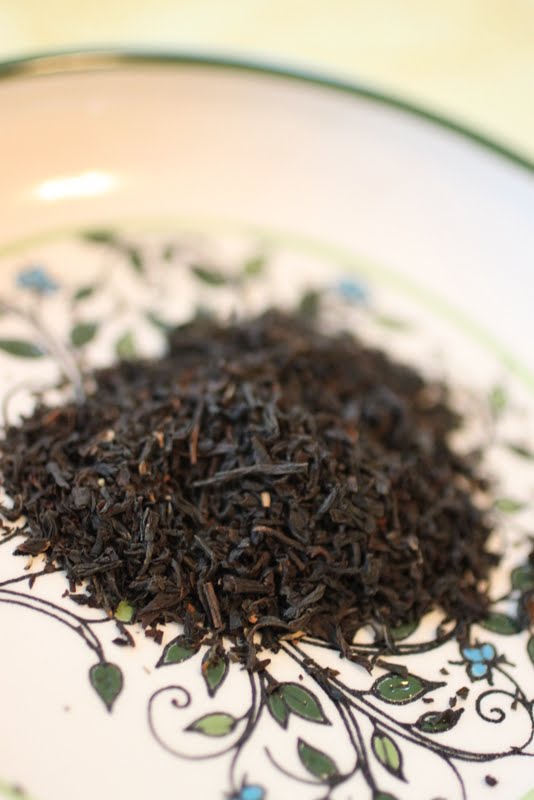
Once you've assembled your materials, fill the large teakettle with water and heat until boiling. Pour enough boiling water into the smaller teapot to fill, then let sit for 2-3 minutes. This heats up the teapot so it will keep the tea warm for a longer time. Meanwhile, measure out the tea you'll need. Mrs. Beeton recommends "the old-fashioned plan" of 1 tsp per person, plus 1 tsp "for the pot." When I make tea for myself, I like to use 2-3 tsp of tea total, depending on how much I want.

When the china teapot is warm, pour the water back into the larger teakettle. If you'd like, reheat it so it's freshly boiled. Measure the loose tea into the china teapot, then pour the boiling water back in. Cover and let steep for 5-10 minutes. This is very important, according to Mrs. Beeton; otherwise the leaves won't open, and "the beverage will consequently be colourless and tasteless."

When you're ready to pour, set the strainer over the teacup to catch any loose tea. Pour, and doctor with milk, cream, and/or sugar as you like.


My perfect cup of tea: Earl Grey with a bit of cream, no sugar.

What's your perfect cup?

Monday, September 24, 2012

A very British announcement!


It's no secret that I'm a bit of an Anglophile. This, combined with my love of history, made me fall utterly and irrevocably in love with Downton Abbey.

For those of you not in the know, Downton Abbey is a PBS historical drama (ITV in the UK) chronicling the secrets, romances, and tragedies of the aristocratic Crawleys and their staff on the eve of World War I. Sounds like your typical stuffy English period drama, right? Well, for some reason, we Americans have gone absolutely batty for it. It has everything we love in a TV show: scandalous rendezvous, British accents, backstabbing, murder charges...and Maggie Smith.

The second season follows the Crawleys through the devastation of WWI, and the third season, which debuts in January, promises new intrigue. But January is oh-so-far-away, and I can't give up an excuse to try out new historical recipes. So I'm extremely excited to introduce a new series for the blog:

Dining at Downton will feature all the recipe testing and historical tidbits you've come to expect from regular posts, plus fanciful speculations as to what Lady Mary might have eaten before, say, going out on a hunt with her future paramour. Of course, this is meant only to be a fun experiment, unauthorized and all (with apologies to Julian Fellowes). It's a leap across the pond from what we've been talking about so far, but hopefully it will be a fruitful and fun adventure.

Don't worry, the regular recipes aren't going away. You'll still find stories, photos, and American history here, just a bit more spread out.

I'm thrilled about this new series, and I hope you will be, too. Special thanks to Josh for creating the beautiful banner. Now, let's talk! Are there any British recipes you'd like to see on the blog? Certain Downton episodes we should discuss? I'm always up for a good dish on the Crawley sisters...