Showing posts with label beverages. Show all posts

Tuesday, January 28, 2014

Winter is coming


But really, it's here.

Last weekend Josh and I hosted two separate gatherings of friends to play the Game of Thrones board game. This is a complicated, multiplayer game where folks play as the houses (House Stark, for example) from the books by George R.R. Martin. Each house aims to capture seven castles, all while dealing with betrayal, vicious fighting over single pieces of land, and lots of jokes about Valyrian steel.

Here's where I confess.

I'm in the midst of both reading and watching Game of Thrones, and it's tons of fun. Josh blazed through all the books a few summers ago (and suffered through a major, inadvertent spoiler), and watched the entire TV series about as quickly. I am traditionally pretty measured in my approach to media: I don't binge-watch TV shows, I like to space out my installments of beloved book series. Right now I'm gearing up to watch the second season and read the third book (because of course, it's best to read first, then watch). George R.R. Martin has done a fabulous job constructing a complicated world with compelling characters, and even though it's sometimes hard to keep track of everyone, the first two books have been immensely fulfilling.

So yes, playing as House Baratheon was pretty great. Even better was playing with Josh's personalized deck of cards, which he developed over winter break. We also brewed some medieval spiced wine, which, while not technically of Westeros origin, might very well have been served at Ned Stark's banquets. It was warm and toasty and spicy and did the trick on a cold winter's night.


All Stark jokes aside, though, I've been having a rough time with winter this year. Sure, I love snow days, and tramping around in freshly fallen snow is satisfying in a way I can't describe. But there's something about the bleakness of the days, the gray skies and biting wind, the fumbling with keys while you still have your mittens on, the inability to just sit on the porch and enjoy the day because the weather sucks, that gets to me. After the hustle and bustle of the holiday season, January and February are bitter. It was great fun to sit inside over a board game, but now that the workweek is once again upon us, it's hard to be interested in much of anything when the weather's like this.

In the meantime I'll make some more spiced wine and watch my narcissus grow. Spring has to be on the way, right?


Spiced Wine (Hypocras)

4 cups red wine (roughly one bottle)
5 tbsp sugar
2 tsp powder douce (recipe follows)

First, make the powder douce: mix 3 tbsp ginger, 2 tbsp sugar, 1 1/2 tbsp cinnamon, 1 tsp cloves, and 1 tsp nutmeg together in a small bowl.

Next, pour 2 tsp of the powder douce, and the sugar, into a saucepan. Mix in the red wine. Warm over medium-low heat until steaming. Serve in cozy mugs.

Wednesday, October 9, 2013

Dining at Downton: Champagne julep


There's something I've been keeping under my hat for a while, and it's time you knew: Josh and I are engaged!

We're thrilled, and despite all the chaos of starting a new school year, we couldn't be happier. We're also trying to get used to calling each other "fiance," which feels pretty weird. (Did anyone else find that?)

As we've been telling our families and friends, they have been very kindly responding with good wishes and congratulations...and Champagne. Lots of Champagne. It's pretty funny, actually, and we've been enjoying it quite a bit, when we can open the bottle. (Josh struggled greatly to open the bottle of Prosecco we used to make the following cocktail. In the end, the cork shot through two rooms and landed behind the couch. It boggles the mind!)

that dastardly cork

I can't help but think that the Crawley family would have toasted with Champagne when Matthew and Mary announced their long-awaited engagement on Downton Abbey. We never saw the family's response (because, let's face it, Matthew and Mary smooching in the falling snow is all you really needed by that point), but Champagne would have been an appropriate toast. So let's extend our little celebration to the internet via a 1920s Champagne julep, straight from The Savoy Cocktail Book.

Personally, I find this to be kind of a silly cocktail, as it's basically Champagne with sugar. Nevertheless, it's an easy and refreshing drink to make, especially if you're distracted by exciting news. Simply add Champagne (or Prosecco, as I did) to a glass with a teaspoonful of sugar, stir, and garnish with fruit or mint. And toast to your favorite celebratory news.


Champagne Julep
(slightly adapted from The Savoy Cocktail Book, via Savoy Stomp)

1 bottle of Champagne or Prosecco
2 tsp of sugar, divided
mint, to garnish
ice

Pour 1 tsp of sugar each into 2 long tumblers. Pour enough Champagne into each glass to fill, and stir to dissolve the sugar. Add ice and bruised mint. Enjoy, and top off with Champagne as needed.

Tuesday, June 25, 2013

Brewing and distilling the old-fashioned way


Turns out cooking from historical recipes isn't the only way to play with food and history. There's a new trend brewing in the alcoholic beverage world (sorry, couldn't resist).

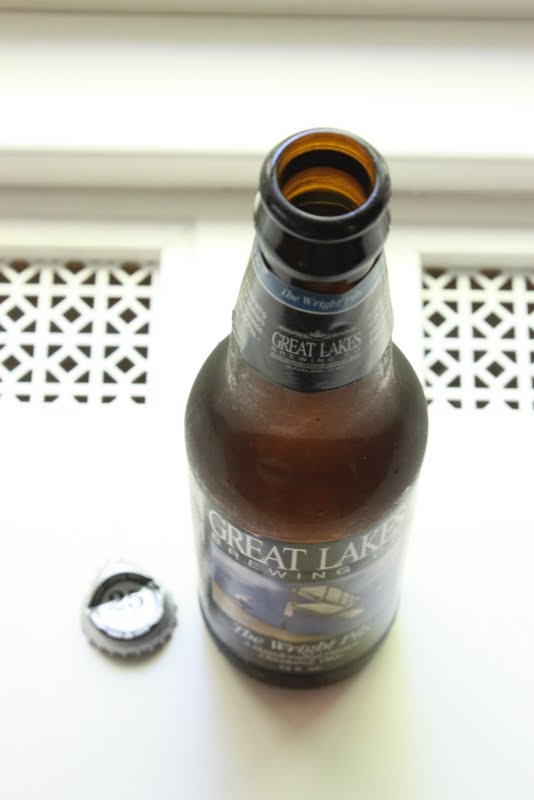
Cleveland's Great Lakes Brewing Company, maker of some of the best craft beers around (not like I'm biased), is now working with archaeologists from the University of Chicago to replicate 5,000-year-old Sumerian beer. Hoping to discover what the first beer in the world tasted like, the Great Lakes brewery is using Sumerian hymns and other cuneiform texts supplied by the archaeological team to brew their concoction. The archaeologists also help the brewery use the appropriate equipment, like clay pots and wooden spoons. Unfortunately, Great Lakes doesn't plan on selling the results to the public...but it doesn't sound like Sumerian beer would appeal to modern tastes. Sour, warm, with a distinct vinegar flavor? Not what I like in my beer.

However, Coastal Extreme Brewing (or the Newport Storm brewery, as they're popularly known) in Newport, RI, is taking a decidedly more palatable approach to old alcoholic beverages. In 2006, the brewery began distilling Thomas Tew Rum, named after a notorious pirate from the 18th century. The company uses traditional methods, equipment, and ingredients to distill rum the way it was originally made in Newport, back in the 18th century. Turns out Newport was the center of the sugar and slave trade when the colonies were young, so naturally a number of rum distilleries sprang up around the city to make good use of the molasses coming into port. Today, Coastal Extreme prepares its rum in traditional copper stills, then lets the rum age for years in barrels, just like the original Newport distilleries of old.

Unsurprisingly, I'm fascinated by the idea of referring to old recipes (some ancient!) for brewing as well as cooking. Just as I can learn a lot from historical recipes, these two breweries have their own motivations. They want to...

  • Find out first-hand what ancestral brews were like
  • Try out slower brewing methods that produce small-batch beverages
  • Recall our nation's history (however unsavory it may have been)
  • Play around with ancient ingredients, like cardamom, honey, and dates

What do you think? Would you ever try Sumerian beer or colonial rum?

Monday, March 4, 2013

Dining at Downton: Flying Scotchman Cocktail

I don't know about you, but I'm still recovering from the season 3 finale of Downton Abbey. To be fair, I'd had some warning; my sister told me of Dan Stevens' plans to leave the show long before that last episode. Josh and I spent the whole season discussing when and how the writers would bump him off. (Which was part of the fun: "There will be a shooting accident! No, he'll have to go abroad to get the inheritance! No, a car crash!")

In the end, the writers get us right in the gut, just as Matthew is reveling in his new fatherhood. You'd think that no one would ever have children on this show, if only because of the high rate of new parents dying off. Oh, Sybil, I still miss you!

While I wasn't as devastated by Matthew's death as by Sybil's, I'm still getting my sea legs back after that punch of a finale. So I thought we could focus on happier times: namely, intrigue at the family retreat in Scotland. (Who else loves the fact that the Crawleys have a family member named Shrimpy?)

Drama abounds in Scotland, from cousin Rose's scandalous attire to Shrimpy's failing marriage to Anna's attempts to learn the reel. And then there's Molesley, drunken belle of the ball. A competitive lady's maid tries to trick O'Brien into getting drunk at the big ball, all to get back at her for knowing just how to do Her Ladyship's hair. But the trick goes awry and Molesley downs the cocktail, which sends him whirling gleefully around the dance floor. It's one of my favorite parts of the episode.

While the suspect drink was most likely punch spiked with whiskey, the guests might as well have been sipping the Flying Scotchman Cocktail. Made with Scotch and vermouth, this cocktail is just one of the many drinks written up in The Savoy Cocktail Book, a 1930s collection of recipes from The Savoy hotel. Back in the 1920s and 1930s, it was all the rage to have a drink at The Savoy when one was in London--just ask Fred Astaire, George Gershwin, and Noel Coward.

I like this cocktail on the sweeter side, but you can adjust the amount of sugar syrup to your liking. Just make sure to drink a toast to poor, hapless Molesley when you try it.


Flying Scotchman Cocktail
(from The Savoy Cocktail Book, as featured in Savoy Stomp)

serves 2

2 oz vermouth
3 oz Scotch whiskey
3-4 dashes Angostura bitters
1 tbsp sugar syrup (2 parts sugar to 1 part water)

Shake vermouth, Scotch, bitters, and 1 tsp of the sugar syrup in a cocktail shaker with ice. Strain into 2 cocktail glass. Add sugar syrup to taste.

Tuesday, December 18, 2012

Dining at Downton: Mulled wine

It's getting to be that time when I start glancing at the calendar to see how many days are left. Not before Christmas (though that's another kind of concern) but before the premiere.

Yes, you know. The U.S. premiere of Downton Abbey Season Three.

January 6! That's less than a month away!

Josh and my sister and I can barely contain our excitement. I will probably need to review the first two seasons before that fated day in order for the story to be completely fresh in my mind. This kind of viewing--leisurely, paced, because I already know what happens--calls for something special to spice it up.

I'm talking mulled wine.

This recipe is particularly appropriate for the Downton Christmas special. I can imagine the Crowleys sipping mugs of spiced, mulled wine by the fire while they discuss the punch-up between Matthew and Sir Richard. Perhaps Mary and Matthew warmed themselves up with a tipple after their mutual declarations of love. It's the perfect thing for a cold, blustery evening, even if your winter's night features only British TV dramas and central heating. (I really do appreciate the modern comforts of home.)

I recently brewed a batch of mulled wine for a holiday party, pulling inspiration from Escoffier: Le Guide Culinaire (a cookbook Mrs. Patmore probably used) as well as from the latest issue of Bon Appetit. The Escoffier recipe is fairly mild, calling for only "zest of 1 lemon, a small piece of cinnamon and mace and 1 clove." I suppose a light hand with the spice makes sense, given the famed Victorian aversion to flavor. Since modern tastes are more adventurous, I added a few more cloves, some tangerines, and orange peel to boot. The result, I think, was well worth the tampering.


Mulled Wine
(adapted heavily from Escoffier: Le Guide Culinaire and Bon Appetit)

2 750-ml bottles of red wine (it doesn't have to be fancy)
3/4 cup sugar
1 1/2 cups apple cider
2 cinnamon sticks
2 tangerines
16 - 20 whole cloves
1 tsp dried orange peel
pomegranate seeds for garnish

Pour the red wine over the sugar in a large, heavy-bottomed pot. Heat over medium-low heat, stirring occasionally, until the sugar is dissolved. Add the cider.

While the liquid heats, prepare the tangerines. Press the cloves (by the sharp end) into the tangerines, using about half the cloves for each tangerine. This way you don't have to strain out the cloves later on.

Place the tangerines, cinnamon sticks, and orange peel in the wine mixture. Heat until steaming, then cover and turn the heat down to low. Serve after twenty minutes, garnishing with pomegranate seeds (if using), and keep warm for second (or third!) servings.

Sunday, October 14, 2012

Dining at Downton: Afternoon tea

When I graduated from college, I moved to New York City to work at a children's literary agency. I knew almost no one and quickly discovered that I am really not cut out for big city living. While I quietly raged against the masses of people crowding the sidewalks of Manhattan, I tried to carve out a space for myself in this city of millions. I reconnected with a few high school friends, and together we explored restaurants and museums and out-of-the-way shops. Still, there were days when homesickness for small-town Ohio would overwhelm me, and I'd need an afternoon pick-me-up.

That's how I discovered Tea & Sympathy, an adorable British tea shop in the heart of the West Village. On the recommendation of my mom's British colleague, I visited the shop one lonely August afternoon and snagged a tiny round table for myself. Wedged in between a table of chatting women and the front window, I ordered a pot of Earl Grey and a plate of scones with clotted cream and jam. The tea arrived steaming hot, accompanied by milk, sugar, and a little tea strainer. (This is where I learned how to pour tea that's been brewed with loose-leaf.) Balancing my book on my lap, I sipped tea and nibbled on light-as-air scones long into the afternoon. When I re-emerged into the heat of the city, I felt lighter, relieved of some of that loneliness.

Afternoon tea, it turns out, is good for what ails you.

The British knew this well. Once the concept of tea as a meal was firmly established in the late 19th century, it took on different meanings depending on your social class. The working class took tea as their final meal of the day, since they often couldn't afford a full meal with meat and vegetables. On the other hand, the extremely wealthy (like the Crawleys) took tea as an afternoon snack, dining on fancy cakes and dainties while they gossiped. As those of you who watch Downton Abbey know, this is the time for scheming, when the Crawley ladies plot out what suitors to cultivate and how to manipulate issues of inheritance in their favor. It's also the time for nursing broken hearts and talking discreetly about intense emotions. As I've discovered, there's nothing like a bracing cup of tea and delicate treats to make you feel better.

While we Americans often think of afternoon tea in conjunction with sweets, the Edwardians also took tea with savory treats like tiny sandwiches. French food was in vogue, so hors d'oeuvres like canapes were on the rise. This brings us to today's snack: canapes de maquereau.


Why yes, we are throwing around a lot of French today.

It's a simple recipe: thinly slice a piece of smoked mackerel, and bake in a dish greased with cayenne pepper and butter. Top little rounds of toast with the baked fish. It's a salty, spicy dish (perhaps spicier than the Crawleys might like), one that will make you drink gallons of tea. But after all, when you have matters of the heart to discuss, nothing else will do.


Canapes de Maquereau
(adapted from Escoffier: Le Guide Culinaire)

4 oz piece of smoked mackerel
1 tbsp butter
1/8 - 1/4 tsp cayenne pepper
4 - 5 slices light bread

Preheat the oven to 350 F. Combine the butter and cayenne pepper and grease the bottom of a baking dish with the mixture. Slice the mackerel into thin pieces and lay on the greased baking dish. Bake at 350 F for 10 minutes, or until the butter melts and the fish is warmed.

Meanwhile, toast the bread. Top immediately with the fish mixture once you remove it from the oven; be sure to sop up any leftover butter with the fish. Serve with tea.

Thursday, September 27, 2012

Dining at Downton: The perfect cup of tea

You know you're in a committed relationship when you start buying the foods your significant other likes. When Josh and I started dating, we quickly discovered that while we both enjoy tea, there are a few major differences in our habits:
  • Josh loves green tea
  • I prefer black tea, but usually I'd rather drink coffee
  • Josh hates coffee
They pose a few difficulties, right? Well, when I started buying special green teas at the grocery store and Josh invested in a Keurig machine for my individual cups of coffee (he is so good to me), that's when I knew it was serious. I've adjusted to his love of green tea, and I'll even sip some now and then. But my heart still thrills to the scent of Earl Grey. Every time I make myself a cup of black tea, I feel like I'm getting away with something.

So I might as well learn how to make the perfect cup of tea, to make those stolen moments that much more enjoyable. And, you know, just in case Violet, Dowager Countess comes to visit.

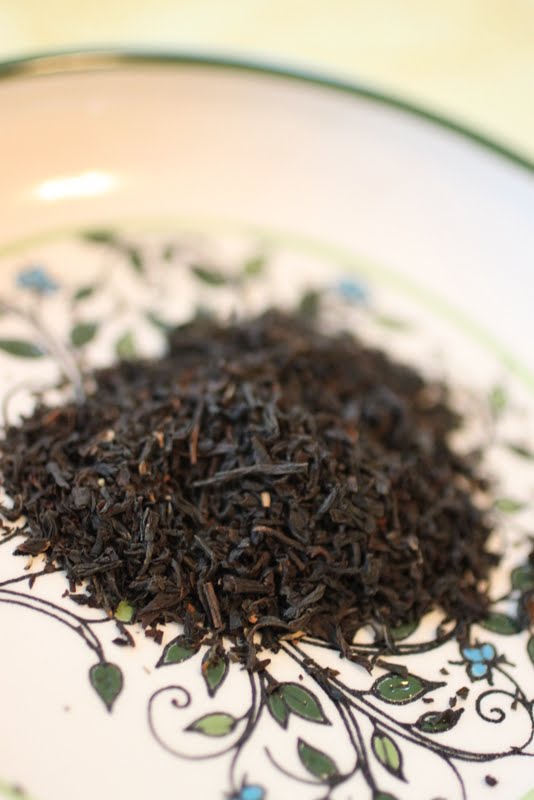
Our first Dining at Downton post is concerned with that most basic of aristocratic skills: brewing tea. It's a little more involved than boiling water; in fact, the ritualistic aspect of it is probably the best part. Plus, you get to indulge in fancy china! (Pro tip: Anthropologie has beautiful tea services.)

Afternoon tea is a staple at Downton Abbey. In the 19th century, well-to-do Brits adopted the custom of taking afternoon tea as an elegant snack. You'd drink tea, eat sugary biscuits and tiny sandwiches, and catch up on all the latest gossip. As devotees of Downton Abbey know, afternoon tea is fraught with import, whether it's because the girls are planning how to find eligible bachelors, or because middle-class Matthew Crawley is discovering that he'll be waited on hand and foot at Downton. (In a later post, we'll discuss how to create a full afternoon tea meal.)

Little has changed about brewing tea since Queen Victoria's times, when afternoon tea first became a custom. So for instructions, I turned to Mrs Beeton's Book of Household Management, which was the authority on cooking and housekeeping in 19th century Britain.

Mrs. Beeton claims that "[t]here is very little art in making good tea," but nevertheless provides detailed instructions for the brewing process. Here they are, updated for the modern reader.

You'll need:
loose tea
  • 1 large teakettle for boiling water
  • 1 smaller teapot for brewing the tea
  • loose-leaf tea (1 tsp per person, plus 1 for the pot)
  • teacups and saucers
  • 1 tea strainer
  • milk, cream, and sugar as desired
Once you've assembled your materials, fill the large teakettle with water and heat until boiling. Pour enough boiling water into the smaller teapot to fill, then let sit for 2-3 minutes. This heats up the teapot so it will keep the tea warm for a longer time. Meanwhile, measure out the tea you'll need. Mrs. Beeton recommends "the old-fashioned plan" of 1 tsp per person, plus 1 tsp "for the pot." When I make tea for myself, I like to use 2-3 tsp of tea total, depending on how much I want.

When the china teapot is warm, pour the water back into the larger teakettle. If you'd like, reheat it so it's freshly boiled. Measure the loose tea into the china teapot, then pour the boiling water back in. Cover and let steep for 5-10 minutes. This is very important, according to Mrs. Beeton; otherwise the leaves won't open, and "the beverage will consequently be colourless and tasteless."

When you're ready to pour, set the strainer over the teacup to catch any loose tea. Pour, and doctor with milk, cream, and/or sugar as you like.


My perfect cup of tea: Earl Grey with a bit of cream, no sugar.

What's your perfect cup?

Thursday, July 26, 2012

Lemonade


High summer in Rhode Island. The days are long and sticky and oppressive (but not as humid as Ohio, where summer can feel like you're swimming through tar). Although the mornings are cool and breezy, they burn off quickly once the blazing sun gets going. If you're out for a walk, you probably spend it hopping from one spot of shade to the next.

This kind of heat always makes me think of that Gershwin song from Porgy and Bess, "Summertime." You know the one: "Summertime, and the livin' is easy." My sister and I sang it a few times with our high school choir, and I remember our choir director telling us to slow it down, to saunter through the song. You can't rush a song like this. You have to imagine you're sitting on a porch in the twilight, shooting the breeze with a friend. Of course, try telling that to a bunch of high school girls who are always thinking of something more exciting than sitting on the porch in the summer.


Now I get it. I like the ease of having nothing in particular to do, of ambling through the day because there's no helping the heat. Every year around this time I get the urge to sing "Summertime" to my sister (we have a relationship full of musical clips and BBC quotations), just because it captures this season like nothing else. The words slip out slow like molasses, and your voice slides from one note to the next. It's the perfect song for summer.

And for refreshment?

Lemonade, only lemonade.

This is one of the simplest recipes I've ever made on this blog. You just need water, sugar, and a fresh lemon. It's a slow and easy recipe, like the Gershwin song. You can let the water and sugar take its time to dissolve, and squeeze in the lemon juice at the last moment. You can chill it overnight or just pour yourself a glass right there. It's a fairly sweet drink, so you might want to reduce the amount of sugar. It's up to you.

Of course, in my opinion there's only one right way to serve this lemonade. On the porch in the twilight, listening to Ella and Louis sing about summer.


Lemonade
(slightly adapted from The "Settlement" Cook Book)

1 lemon
3-4 tbsp sugar
2 cups water

Heat the water just until boiling, and pour over the sugar. (You may want to start with 3 tbsp and adjust to taste once you've added the lemon.) Stir to dissolve, and let sit until cool. Squeeze the juice of the lemon into the sugar water, and stir to combine. Add sugar to taste. Strain the liquid to remove any seeds or pulp. Chill overnight, or pour yourself a glass over ice.

Thursday, July 12, 2012

Flaxseed tea

There can be hidden gems in old cookbooks. Like last week's kuchen tarts, or the Little House apple turnovers, or the Old Virginia pancakes. Come to think of it, those hidden gems all have to do with baking or flour-based deliciousness.

Anyway. Sometimes there are successes. And sometimes there are failures. And sometimes there are just plain weird recipes.

Flaxseed tea is just such a recipe. It sounds promising, like the kind of tea brewed from garden leftovers that Marilla might have served to Anne out at Green Gables. Unfortunately, the properties of the flax seed make it into an entirely different beverage than you'd expect.


Here are the basics:

  • After washing 1 tbsp of flax seed (I just so happened to have some lying around...that's how I know I'm turning into a health-conscious cook), mix it with 1 cup cold water.

  • Simmer the mixture on low heat for an hour.

  • Stir in the juice of 1 lemon and sugar to taste (Mrs. Kander recommends 1 tbsp, but that's a lot. I didn't add any).

In simmering the tea for an hour, I discovered one of the basic properties of the flax seed: it is mucilaginous, which means that when it's blended with liquid, it becomes gelatinous. Like egg whites, for example. (I should have remembered this from the time I used my handy ground flax seed as a substitute for egg in a brownie recipe.)

This so-called "tea" thus becomes a thick, jelly-like substance. Once mixed with lemon juice, it tastes and feels like...well...lemon-flavored egg whites.


While I appreciated the nutritious aspects of the flax seed, I couldn't really get over the texture. This isn't one to try at home, folks. (Your home, really, since my home has been serving as a test kitchen for the bizarre for over a year.) I wish that I always had an open mind when it comes to unusual recipes, flavors, and textures, but alas: mucilage is one thing I don't want to learn to like.

Monday, July 9, 2012

Mint julep

Now that summer (with all its heat and humidity) is in full swing, my sister Lissa has been contemplating what would make the weather more bearable. There's swimming, long afternoons in Starbucks, evenings at the air-conditioned movie theater.* There's also the tried-and-true tradition of iced mixed drinks. Every few days, she sighs wistfully, "Wouldn't it be nice to be sipping a mint julep on a Southern porch?"

she's up to something

Yes, it would be nice. In fact, we can sip mint juleps right here on our Ohio porch. Except for the fact that Lissa doesn't drink alcohol.

Despite this drawback, I decided to make mint juleps anyway. Lissa could imbibe in spirit (hah), while my dad and I enjoyed a refreshing cocktail. So I flipped open the "Settlement" book to its recipe for "Mint Julep."

Then the trouble began.

You know how I've occasionally had to do complicated mathematics to figure out measurements? And how I rejoiced that this "modern" cookbook gave you all of the measurements so you didn't have to work too hard? Not so for mint juleps. Here is the recipe in full:

Large Thin Julep Glass--Dissolve one teaspoon fine sugar in water, one dash Maraschino, one glass whiskey or brandy as preferred, four or five sprigs mint held to side of glass, leaves up. Fill up with fine ice and do not bruise the mint. Trim with fruits. If preferred mint can be bruised, but above is the regular Southern julep.

Oh, it's all fine and dandy until you get to the "glass" of whiskey or brandy. How big is a "glass"?

So I turned to my trusty Joy of Cooking for advice. But the mystery only deepened, for Joy instructed:

Pour into bar glass: 1 large jigger bourbon whisky

"Jigger"?

Add more ice to within 3/4 inch of top of glass. Add: 1 pony whisky

"Pony"?

For the first time I began to regret that I don't drink cocktails. If I did, perhaps I'd know the lingo. Apparently you don't have to go back in time to find hard-to-decipher recipes.


Finally, after much searching, I discovered a handy table in Joy that explained that 1 "jigger" equals 1 1/2 oz, not to be confused with the "large jigger" (2 oz), while a "pony" equals 1 oz. So after cross-referencing the modern recipe with the 1903 recipe, and discovering that our liquor cabinet had only brandy, and converting the weird bar slang to actual measurements, and failing to crush ice from our freezer, I managed to make two mint juleps, one for me and one for my dad. Lissa supervised the proceedings, though she did not taste the results. And indeed, the drink was refreshing, cool and minty.

Lest my sister ever complain that I'm not nice enough to her, let this be a testament to my devotion: I'm willing to battle multiple recipes and cabinet shortages to make her a cocktail she won't even drink.

But that doesn't mean it wasn't fun.


Mint Julep (1903 Version)
(adapted from The "Settlement" Cook Book and Joy of Cooking)
two servings

for the sugar syrup:
2 tsp sugar
1 tsp hot water

for the drinks:
6 oz brandy or whiskey, divided
9-10 sprigs mint, plus more to garnish
ice to fill (it's supposed to be crushed, but I liked it with regular ice)

Make the syrup: mix the sugar and water together in a small bowl until dissolved.

Make the drinks: divide the syrup equally into two tall glasses (if you don't have julep cups, you can use tall bar glasses). Squeeze the mint in your hand to release some of the oil (a nice compromise between bruising and not), and place 4-5 sprigs, leaves up, in each glass. Pour 1 1/2 oz brandy or whiskey into each glass. Fill each glass with ice until 3/4 full. Pour another 1 oz brandy or whiskey into each glass, and stir to combine. Garnish with extra mint leaves.

Serve on a porch in the twilight.


* Except when the entire movie theater loses power. Like it did last week when we were one hour into Spiderman.

Monday, June 25, 2012

Boiled coffee

Anyone who knows me well can tell you that I love coffee. It's the first thing I turn to in the morning, and while I appreciate a good cup of Earl Grey, the lure of a freshly-brewed cup of coffee is often just too strong.

There's something comforting about the ritual of coffee. Wrapping your hands around a steaming mug, savoring the rich, slightly bitter taste before the day really begins. It's my preferred way to wake up.

La Colombe coffee shop, Philadelphia


One of my other abiding loves is the Betsy-Tacy series by Maud Hart Lovelace. It's a children's series based on the author's childhood in early 20th-century Minnesota, where the author lightly fictionalizes herself as Betsy Ray. The later books follow Betsy's adventures in high school and beyond, and they're everything that's wonderful about classic literature. Warm, comforting, friendly. I reread the high school books about once a year, and each time I yearn to be Betsy Ray.

Lovelace spends a lot of time describing the rituals of early 20th-century Midwestern life. For example, the Ray family invites their friends over each week for "Sunday night lunch:" an evening of onion sandwiches, coffee, and singing around the piano. Each part of the meal is lovingly detailed, from Mr. Ray's careful attention to creating sandwiches to the process of making coffee. Like so many activities in these books, I fell in love with Sunday night lunch. But it was the coffee that gave me pause.

"The meal was prepared by Mr. Ray... First he put the coffee on. He made it with egg, crushing shell and all into the pot, mixing it with plenty of coffee and filling the pot with cold water. He put this to simmer and while it came to a boil, slowly filling the kitchen with delicious coffee fragrance, he made the sandwiches."

Egg! In coffee! With no filter!

My grandparents affectionately referred to hot water mixed with coffee grounds as "camp coffee," but I'd never head of mixing in an egg before. It sounded weird. It sounded slightly gross. It sounded like I needed to try it.

It turns out that the method described above was America's preferred way of brewing coffee in the late 19th and early 20th centuries. The filtering method we use today was known as the "French" way, and very few Americans deigned to make their coffee this way. The egg served to clarify the coffee (since it was so muddied by coffee grounds). So of course there was a recipe for this method in the "Settlement" Cook Book, which was so focused on Americanizing immigrants. What better way than to teach them the American way of brewing coffee?

So, dear reader, I tried it. Carefully following Kander's instructions, I mixed 1 tsp of coffee with a rinsed eggshell and a bit of cold water in my shiny red teakettle. Then I added 1 cup of boiling water, and set the pot to boil for five minutes. After letting the mixture sit off the heat for ten minutes, I added half a cup of cold water, mixed the whole thing again, and poured myself a cup.


It was...less than thrilling. It tasted like incredibly weak Turkish coffee--it had all the complex, rich and bitter flavor of Turkish coffee, but like it had been watered down to a quarter of its strength.

But I was most astonished by the effectiveness of the eggshell. It worked! The coffee grounds settled to the bottom of the pot, and all that poured into my cup was brewed coffee. Magic.

Still, my morning was not the same with this pitiful excuse for coffee. Apparently I much prefer the French method. So I brewed a normal cup with my trusty Black & Decker coffeemaker, and set to the painful task of cleaning the eggshell out my teakettle.

So, what about you? Have you ever made coffee this way? Or are you a dyed-in-the-wool fan of the French method?


Works cited: Heaven to Betsy by Maud Hart Lovelace. Food in the United States, 1820s - 1890 by Susan Williams.