Showing posts with label ohio. Show all posts

Thursday, December 5, 2013

Afternoon Adventure: The Tavern Club

Happy December! I've just returned from a whirlwind trip home to Cleveland for Thanksgiving, and it was wonderful to see family and take long walks and eat lots of delicious (modern) food. Around the holidays we often reflect on the past--not only our recent past and childhoods, but the "family past," stories about my grandfather's grandparents and early Cleveland. Occasionally trips downtown are involved. Yes, I come by my history obsession genetically.

This time around, my sister and I had the chance to visit the Tavern Club, a venerable men's club in downtown Cleveland. Our grandfather is a long-standing member of the club (and he owns the striped tie to prove it!), and he escorted us to the club's yearly Father-Daughter Tea the evening after Thanksgiving. This is the one time women are allowed in the club, and while we weren't allowed to take documentary photos, I took careful mental notes to report back to you.

(Cleveland Area History, 1904)


Back in the 1890s, when Cleveland hadn't yet experienced its troubles of the mid-twentieth century and was still home to millionaires like John D. Rockefeller, many well-to-do men belonged to clubs. As Warren Corning Wick, chronicler of Millionaires' Row, noted,
"Membership in these clubs was carefully noted in code next to a man's listing in the Blue Book, the Bible of high society."
Just as in England (where Cleveland men most likely got the idea), a man's club told a lot about him. And in the 1890s, the sons of prominent Cleveland families decided that none of the available clubs were quite right; they were too stuffy, too grown-up, with not enough emphasis on horse-racing and squash. So they got together and founded the Tavern Club in a humble house, though it quickly moved to its official, current building in 1904. The new building, "an adaptation of Elizabethian architecture," included squash courts upstairs, lockers, and plenty of dark rooms for playing poker and smoking cigars. While the squash courts have been improved, the building still looks remarkably like it did in 1904.

Founder and first president Henry K. Devereux (Heritage Pursuit)

My grandfather gave us the grand tour, and we took our time poking around. Dark wood paneling and chinoiserie accents make you feel immediately like you're in a turn-of-the-century club, and there's a massive fireplace surrounded by comfy leather chairs in almost every room. The walls are covered with tasteful paintings of female nudes (it is a men's club, after all), 1916-era photographs labeled with inside jokes, and portraits of club presidents and squash team champions. The bar on the first floor is plastered with old stock certificates, supposedly dating from the stock market crash in 1929--the certificates were worthless, so members papered the walls with them instead. Upstairs you can peek in the marble bathrooms, and in the basement wooden lockers remain from the days of Prohibition, where men could store a personal bottle of spirits away from home.

The whole building felt like such an old-boys' club. As my grandfather put it, it's the kind of place where "deserving young men" could get away from the rigors of business and relax with their closest friends in a congenial atmosphere. What's even more fascinating is how the club has survived, because it's such a hold-over from the days when men and women relaxed in segregated circles. I'm not sure you'd find any all-male clubs being founded in America today. More's the pity: despite the exclusivity, the Tavern Club was a cozy place to while away a late November afternoon.


Works cited: My Recollections of Old Cleveland by Warren Corning Wick. Excerpt from Cleveland Town Topics, May 7, 1904.

Monday, August 5, 2013

Afternoon Adventure: Sabbathday Lake Shaker Village


As a teenager I went to an all-girls school, one steeped in tradition and programs that recalled English prep schools. One of the big ones was chapel, where we heard guest speakers and senior speeches. Before the program began, we often sang a community song, with sheet music left on every other chair for students to share. The director of the music department would accompany us on the organ or piano, and it felt a little like church, though our school was determined to remain secular.

The regular rotation included "Simple Gifts," a traditional Shaker song about community and dancing. I bet you know it: "Tis a gift to be simple, tis a gift to be free..." I can sing it by heart now, we returned to it so often. Once, in the middle of a rather serious speech, our head of school took a break to perform a traditional Shaker dance. She raised her arms and turned around, all while singing the song alone, which is probably why it's forever emblazoned in my brain.


Anyway, all that is to say that I have a passing acquaintance with the Shakers. So I jumped at the chance to visit Sabbathday Lake Shaker Village when I was in Maine with Josh and his family. While there used to be a number of Shaker communities throughout New England, Ohio, Indiana, and Kentucky, very few remain, and those that do are usually historical recreations. Sabbathday Lake, located in New Gloucester, ME, is different: it houses the three remaining Shaker believers.

Three. In the world.


Originally founded in England in the 1780s, the Shakers were an offshoot of Protestantism that focused on celibacy, hard work, and communal living. Dance formed an integral part of their weekly worship, so outsiders began to term them "Shakers" for their vigorous movements. They quickly spread to the United States and built a number of communities, which reached their height in the early 19th century. But because of their belief in celibacy, the only way to add members was through conversions and fostering children. So membership began to decline, especially as religion became less and less important in mainstream society. Yet three believers remain today.


The tour at Sabbathday Lake reflected this reality in a lot of ways. Only 6 of the 18 buildings in the village were open to us, since the three members still work on the farm and produce crafts and herbs to sell. At the beginning of the tour, our guide gave us a brief history of the Shakers and mentioned that the members of Sabbathday Lake were still accepting new converts. So if any of us were interested... Maybe it's just my sentimental side, but I thought I could sense some sadness behind her joking tone. Yes, the Shakers represent a dying way of life, for a good reason. But it's unfortunate that this lifestyle will pass on.


Most of the rooms we visited felt like part of a museum. There were the period rooms above the meetinghouse, spare and neat, with examples of Shaker furniture and innovations in arranging a house. (The Shakers invented practically everything, it turns out, from "button chairs" that allow you to tip back in your seat to flat brooms.) One room displayed the history of processing apples (again, rife with inventions). On the whole, it didn't feel very much like a place inhabited by real people, doing real work.


What got me thinking that day, besides the quiet rooms and the knowledgeable tour guide, were the constant reminders that this represented the last vestige of a unique lifestyle. That Shaker song I knew? One of thousands composed by early believers, many passed on orally (though many have been written down). The three surviving members spent their early lives apprenticing to the jobs they really wanted, like baking, until they had mastered them. Summer people can join them in their Sunday worship at the 18th-century meetinghouse, where they can participate in a traditional Shaker service. But sometime not so far in the future, only tours will pass through that meetinghouse.

If you're at all interested in the Shakers, Sabbathday Lake is worth the trip. It's a fascinating glimpse into another world.

Tuesday, June 25, 2013

Brewing and distilling the old-fashioned way


Turns out cooking from historical recipes isn't the only way to play with food and history. There's a new trend brewing in the alcoholic beverage world (sorry, couldn't resist).

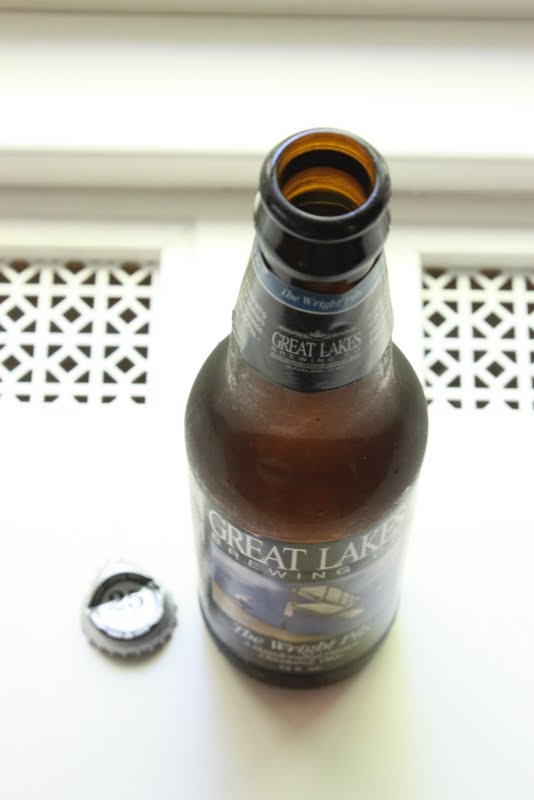
Cleveland's Great Lakes Brewing Company, maker of some of the best craft beers around (not like I'm biased), is now working with archaeologists from the University of Chicago to replicate 5,000-year-old Sumerian beer. Hoping to discover what the first beer in the world tasted like, the Great Lakes brewery is using Sumerian hymns and other cuneiform texts supplied by the archaeological team to brew their concoction. The archaeologists also help the brewery use the appropriate equipment, like clay pots and wooden spoons. Unfortunately, Great Lakes doesn't plan on selling the results to the public...but it doesn't sound like Sumerian beer would appeal to modern tastes. Sour, warm, with a distinct vinegar flavor? Not what I like in my beer.

However, Coastal Extreme Brewing (or the Newport Storm brewery, as they're popularly known) in Newport, RI, is taking a decidedly more palatable approach to old alcoholic beverages. In 2006, the brewery began distilling Thomas Tew Rum, named after a notorious pirate from the 18th century. The company uses traditional methods, equipment, and ingredients to distill rum the way it was originally made in Newport, back in the 18th century. Turns out Newport was the center of the sugar and slave trade when the colonies were young, so naturally a number of rum distilleries sprang up around the city to make good use of the molasses coming into port. Today, Coastal Extreme prepares its rum in traditional copper stills, then lets the rum age for years in barrels, just like the original Newport distilleries of old.

Unsurprisingly, I'm fascinated by the idea of referring to old recipes (some ancient!) for brewing as well as cooking. Just as I can learn a lot from historical recipes, these two breweries have their own motivations. They want to...

  • Find out first-hand what ancestral brews were like
  • Try out slower brewing methods that produce small-batch beverages
  • Recall our nation's history (however unsavory it may have been)
  • Play around with ancient ingredients, like cardamom, honey, and dates

What do you think? Would you ever try Sumerian beer or colonial rum?

Thursday, February 28, 2013

Maple sugaring (II)


Last week I wrote about my family's maple sugaring tradition. Today I'll add an amendment: while we love most of the maple sugaring process (tapping trees, collecting sap, boiling it down in the evaporator), we have a hard time with one part: finishing the syrup.

This is the part where the syrup has been boiled to the right consistency, but you have to filter out the minerals and sediment in order to package it. First you heat up the syrup to the boiling point, and then you run it through a wool filter. It's a long and slow process, mostly because the syrup gets all gummed up in the wool filter (what with residue and all that). Once you finally have enough syrup, you have to heat it up again in order to hot-pack it. Still, this is nothing more than filling fresh pint or quart bottles and sealing with a special cap. It's much less involved than canning.


So yes, my family loves one long and slow process (boiling), but somehow we can't make ourselves love another long and slow process (filtering). I know, I know. The idiosyncrasies of the human mind!

As a result, we've made syrup for years without going through that final step. Since the syrup's never been hot-packed, we have to keep it in the freezer. So we have a freezer full of maple syrup.


Ah, problems.

Just before I flew back to Rhode Island, my dad and I spent an afternoon and evening filtering and packaging a few quarts of syrup. We discovered it's best to do this when you can walk away for a while; that way, the intensely slow drip of the filter won't drive you completely insane. In fact, it was actually kind of fun.

But while this process may seem extremely old-fashioned and back-to-the-land, it's actually a "modernized" version of the earliest maple sugaring. The Chippewa and other Northeastern Native American tribes were the first to harvest maple syrup, long before the Europeans set foot in North America. The Chippewa collected sap in much the same way as we do--a makeshift spile let sap drip into a bucket, and it was boiled until syrupy--but they created a different end product. Instead, they turned most of the syrup into granulated maple sugar, which was more easily stored throughout the year. By working the syrup in a special trough, they could turn it into fine granules that were then stored in birch bark containers. The Chippewa drew on this store throughout the year for ceremonies and special meals.

No matter which way you finish, maple sugaring is a labor-intensive process that shows you where your food comes from, beginning to end. And that's something to savor.

Thursday, February 21, 2013

Maple sugaring


In our family, February and March are the maple syrup months. Temperatures dip to freezing at night and warm up during the day, so the sap runs easily from the trees. Evenings are spent out in the sugar shed, boiling sap down to golden syrup in a gas-heated evaporator. On weekends, we enjoy pancakes with maple syrup fresh from boiling.


My parents started this grand maple sugaring experiment the year I was born. Initially it was a small operation: one or two taps in the trees, yielding just enough sap to boil on the stove. My dad reminisces wryly about the time he forgot the sap on the stove while he was painting the nursery, and the pot boiled over into a sticky, burnt mess. Since then the project has slowly grown. My dad transitioned to a secondhand evaporator (a channeled metal container that heats up the sap evenly), and we invited my first-grade class over on a field trip. (Fifteen little first-graders standing very close to a hot metal evaporator...there was at least one melted winter jacket.) We helped tap trees and ate cornbread with fresh maple syrup.


After we moved to a new house, the improvements continued: refined heating apparatuses, a new evaporator, special sets of plastic bags to collect the sap. We've visited bigger farms during Maple Madness, Northeast Ohio's maple sugaring festival (yes, it's that big here). We've seen a huge farm that collects sap via plastic tubing, with special machines that jump-start the boiling process; we've shyly toured an Amish operation that heats entirely with wood. There are so many options for processing sap, and yet there's nothing I love more than our own.


Dad's trying out bright blue polyethylene bags this year. They're not as scenic as those metal buckets you see in postcards, but they're much easier to empty. When we've collected enough, we hike back to the red sugar shed in the backyard to start boiling. In some ways, this shed is the culmination of this ongoing project: a rustic space set aside just for maple sugaring, warmed by a wood stove. When I was in high school, Dad set up a radio and speakers out in the shed so we could listen to the oldies station and sing along while we watched the sap. I've since run off with that radio, but standing around in the quiet listening to the sap boil is perfect in a different way. We have a chance to talk, and sometimes Mom hikes down to take photos, and I get the sense that this is one thing that will never change.